

Best Cleaning Supplies for Busy People: 2026 Picks
Table of Contents
- Quick Comparison: Best Cleaning Supplies for Busy People
- 3-in-1 Robot Vacuum: Automated Floor Care That Runs Itself
- Hands-Free Flat Mop & Bucket Set: Ergonomic Wet Cleaning
- Kitchen and Bathroom Essentials That Save Time
- Time-Saving Cleaning Hacks for Busy Professionals
- Essential Cleaning Kit for Beginners: What to Buy First
- How to Maintain a Clean House With a Full-Time Job
- Frequently Asked Questions
Last Updated: September 11, 2026
Quick Comparison: Best Cleaning Supplies for Busy People
The best cleaning supplies for busy people are the ones that remove a step, not add one. The tools that actually get used are the ones that are already set up, already charged, and already within arm's reach. A recent U.S. Bureau of Labor Statistics American Time Use Survey found that the average person spends well under an hour a day on household activities, which means every minute of friction matters.
Cleaning supplies is a broad term, so let's define it precisely: the physical tools, cloths, solutions, and organizers a household uses to remove dirt, dust, and germs from surfaces on a recurring basis. The category splits into three tiers, and knowing a product's tier is the fastest way to decide what you need.
- Automated tools handle a whole task with no hands on it (robot vacuum, touchless dispenser)
- Ergonomic tools make a task faster and less physically tiring (flat mop set, scrub gloves)
- Organizers keep the first two tiers accessible so you don't dig for them (sink racks, sponge-and-soap stations)
| Pick | Product | Price | Best For |
|---|---|---|---|
| Best overall | 3-in-1 Robot Vacuum | $49.99 | Daily floor maintenance on autopilot |
| Best for wet floors | Hands-Free Flat Mop & Bucket Set | $37.99 | Deep cleaning without wringing by hand |
| Best kitchen starter | Double Layer Sponge & Soap Rack | $14.99 | One-handed dish cleanup |
| Best hygiene upgrade | Automatic Touchless Foam Soap Dispenser | $35.99 | Bathrooms and kitchens shared by kids |
Below, we'll show how each earns its place, plus the hacks that keep a home presentable on a full-time schedule.

3-in-1 Robot Vacuum: Automated Floor Care That Runs Itself
Floor care is the biggest time sink in a weekly routine, and the easiest to hand off. The 3-in-1 Robot Vacuum runs a 1500Pa suction motor with Boost IQ technology, stands 2.85 inches tall, and delivers up to 100 minutes of runtime from a 0.6L dustbin. Schedule it, walk away, and it returns to its charging base on its own.
At 2.85 inches, this unit clears the gap under most sofas and low shelving, where dust accumulates fastest. Drop-sensing keeps it off stairs, and the large wheels handle carpet transitions without stalling.
Pros and Cons
Pros:
- Auto-recharge means it's always ready without you thinking about it
- Triple-layer filter captures fine dust rather than redistributing it
- Quiet enough to run while you work from home
Cons:
- 0.6L dustbin needs emptying more often in homes with pets
- Not a replacement for a wet mop on sticky kitchen spills
Hands-Free Flat Mop & Bucket Set: Ergonomic Wet Cleaning
Wet cleaning fails for one reason: wringing. The Hands-Free Flat Mop & Bucket Set removes that step with a built-in wringing system, so your hands never touch the dirty mop head. The stainless-steel handle adjusts from 23.6 to 50.4 inches.

The 360-degree swivel head reaches under furniture and into corners, and the set ships with four ultra-absorbent microfiber mop heads. It's surface-safe on hardwood, marble, tile, and laminate, so one tool covers the whole house.
Pros and Cons
Pros:
- Hands-free wringing keeps the process hygienic and dry
- Adjustable handle reduces back strain during longer sessions
- Uses less water and less cleaner per pass
Cons:
- The bucket still takes up closet space when not in use
- Four mop heads means laundry cycles if you clean a large home weekly
Kitchen and Bathroom Essentials That Save Time
Kitchen and bathroom messes are small, frequent, and repetitive, which is why they eat the most minutes. The fix is consolidating tools so one motion does two jobs.
Magic Silicone Dishwashing Gloves
These gloves combine a scrubber and a sponge into one wearable tool, so you stop switching between a brush, a sponge, and bare hands. The food-grade silicone bristles build foam quickly, cut through grease without scratching cookware, and handle temperatures up to 160°C (the FDA).
Double Layer Sponge & Soap Rack
Fill the pump with dish detergent, press the sponge, and soap dispenses directly onto it. The two-in-one design eliminates the bottle-and-sponge juggling act and the dripping mess that leaves residue on your counter. The ABS body accepts any standard sponge or scrubber.
Automatic Touchless Foam Soap Dispenser
An infrared sensor dispenses foam with a wave of your hand, so nobody touches a pump four other people just touched. The removable transparent tank shows when you're running low, and the leakproof build holds up in a steamy bathroom.
Time-Saving Cleaning Hacks for Busy Professionals
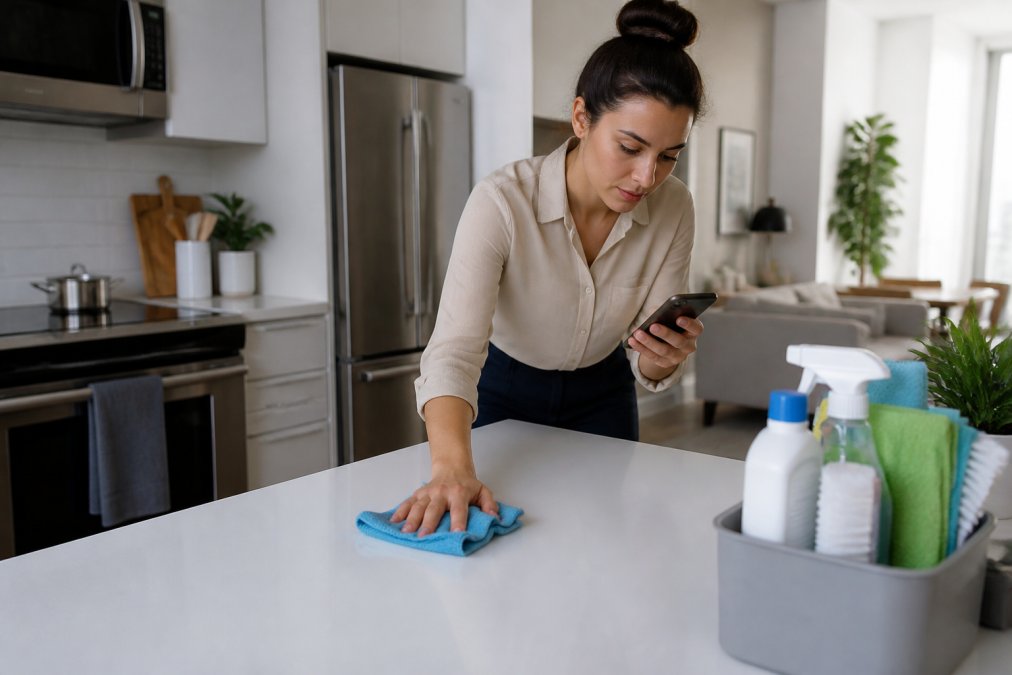
Most cleaning-hack lists hand you a pile of tips and leave the hard part, actually doing them, to willpower. That's why they fail. Busy professionals don't need more tasks, they need fewer decisions.
Stack cleaning onto habits you already have
Habit stacking works because the trigger already exists. You don't need to remember to clean; attach it to something you already do without thinking.
- Clean while the coffee brews. The three minutes you stand at the counter are already spent. Wipe the stovetop and one counter section during them.
- Wipe the bathroom sink while the shower heats up. That 60-90 second wait is dead time you're already paying.
- Run a microfiber cloth over the bathroom mirror after you brush your teeth. Same motion, same room, no extra trip.
- Empty one dishwasher section while dinner reheats. Ninety seconds, zero new decisions.
The pattern: pair the clean with a moment that already happens. The habit carries the task.
Cut the decision load, not just the minutes
Decision fatigue is the real enemy. If picking up a cloth requires choosing which cloth, which spray, and where they live, you'll skip it. Two structural fixes beat any single hack:
- One caddy per floor. A single carrier with an all-purpose cleaner, a microfiber cloth, and a scrub brush removes the trip to the supply closet. The caddy lives where the mess happens.
- Pre-load the tool, not the task. A spray bottle that's already filled, a mop that's already damp, a robot vacuum that's already scheduled, the tool being ready is what makes the task start.
Let automation absorb the daily tier
The daily tier is where busy people burn out, because it never ends. Hand it off wherever you can:
- Schedule the robot vacuum for a time you're not home. Floor debris is the most repetitive daily task and the easiest to automate.
- Run the dishwasher nightly regardless of load size. A partial load still sanitizes, and an empty sink in the morning changes how the whole kitchen feels.
- Use a touchless dispenser at the highest-traffic sink. Removing the pump-press removes the last excuse for a 10-second hand wash.
Make the reset visible and finite
A vague "tidy up" is unstartable; a 10-minute timer with a visible countdown is finishable. Set it before bed, work one room, and stop when it rings, even if the room isn't perfect. The goal is a floor, not a ceiling.
What actually breaks the system
The habit fails for predictable reasons: the tool isn't charged, the cloth is in the laundry, the spray is empty. The fix isn't more discipline, it's a two-minute Sunday check. Charge the vacuum, refill the spray, swap the microfiber pad, restock the caddy.
Essential Cleaning Kit for Beginners: What to Buy First
The angle most beginner guides miss: a busy person doesn't need a starter kit, they need a minimum viable kit, the smallest set of tools that covers the most surfaces with the fewest decisions. Every item past that point is a thing to store, refill, and remember. The goal isn't a well-stocked closet; it's a kit small enough that you'll actually use it.
The bare-minimum kit: six items, one caddy
If you buy nothing else, buy these. Each covers a job no other item does.
- A cordless or robot vacuum for daily floor maintenance, the single highest-time-cost task you can hand off
- A flat mop with a wringer bucket for wet cleaning, one tool covers hardwood, tile, laminate, and sealed stone
- Two microfiber cloths, one for dusting (dry), one for wet wiping. Color-code them so you never mix the two
- An all-purpose cleaner safe for sealed surfaces, read the label for the surfaces it's rated for, not just the scent
- A disinfectant for high-traffic touchpoints like handles, switches, and faucets
- A scrub brush or silicone scrub gloves for dishes and grout, the only item on the list that reaches into texture
That's the whole kit. It fits in one caddy and covers roughly 90% of what a typical home needs on a recurring basis.
What to skip until a specific problem appears
Most beginner kits bloat because they're written for every possible mess. Skip these until you have a reason:
- Specialty surface cleaners (granite, stainless, glass), an all-purpose cleaner handles most sealed surfaces; buy the specialty only when a surface actually streaks
- Multiple mops, one flat mop with swappable pads replaces a sponge mop, a string mop, and a steam mop for routine use
- A full caddy of sprays, one all-purpose and one disinfectant cover the majority of jobs; a third bottle is usually a duplicate in a different scent
- Single-use wipes, convenient, but they dry out, run out, and cost more per clean than a cloth and a spray bottle
The trade-off you're accepting
A minimalist kit means occasional compromise: one all-purpose cleaner where a specialist might do slightly better, a hand-wrung mop head instead of a spin bucket, a swapped microfiber pad instead of a fresh tool. For a busy household, that trade is almost always worth it, the kit you use beats the kit you own.
Add organizers only after the tools exist
Storage is the second purchase, not the first. Once the six items are in rotation, add:
- A sink-side rack for sponges and soap so the dish station is one-handed
- A caddy to carry supplies room to room without a closet trip
- A wall hook or under-sink bin for the mop and bucket so they dry without mildewing
The order matters: tools first, storage second. Buying organizers before you know which tools you reach for is how closets fill up with unused gadgets.
How to Maintain a Clean House With a Full-Time Job
Maintaining a clean house with a full-time job comes down to frequency, not intensity. Short daily passes beat weekend marathons because mess compounds: a 15-minute reset on Tuesday prevents a three-hour project on Saturday.
Split the work into daily, weekly, and monthly tiers:
| Frequency | Tasks | Time |
|---|---|---|
| Daily | Counters, dishes, one floor pass, 10-minute reset | 15-20 min |
| Weekly | Bathroom sanitization, floors, bedding, trash | 60-90 min |
| Monthly | Appliances, baseboards, filters, deep clean | 2-3 hours |
Automate whatever falls into the daily tier. A scheduled robot vacuum and a touchless dispenser both run without prompting. For the weekly tier, batch tasks by room rather than by type so you're not walking the same hallway four times.
The habit that holds the system together is the nightly reset. Ten minutes of putting things back where they belong keeps the weekly deep clean from becoming a full-day event.
The real obstacle isn't finding time to clean, it's that most cleaning tools create work before they remove it: cords to untangle, bottles to refill, mop heads to wring by hand. Oatmehome offers a curated range of home tools, kitchen essentials, and bathroom accessories built around everyday functionality. The 3-in-1 Robot Vacuum handles floors on a schedule, the Hands-Free Flat Mop & Bucket Set takes the strain out of wet cleaning, and the Automatic Touchless Foam Soap Dispenser keeps high-traffic sinks hygienic without anyone touching a pump. Shop Now and build a routine that runs mostly without you.

Frequently Asked Questions
What are the most essential cleaning supplies for a small home?
For a small home, focus on multi-surface tools that do more than one job. A robot vacuum handles floors daily, a flat mop with microfiber heads covers wet cleaning, and silicone dishwashing gloves replace brushes and sponges. Add a touchless soap dispenser for the bathroom and a sink rack to keep counters clear. These items take up little space and cover most surfaces without a closet full of single-use products.
How can I clean my house faster if I have a busy schedule?
Cut the number of steps, not the number of tasks. A robot vacuum with scheduled cleaning runs while you are at work. A hands-free flat mop removes the wringing step. Silicone gloves with built-in sponges skip the separate scrub brush. Set a 15-minute timer for high-traffic areas like the kitchen and bathroom, and let automated tools handle the rest. Fewer tools and fewer steps mean less time per session.
What cleaning products are actually worth the money?
Products that replace two or three items earn their cost fastest. The 3-in-1 Robot Vacuum at $49.99 vacuums, sweeps, and handles multiple surfaces in one pass. The Hands-Free Flat Mop & Bucket Set at $37.99 includes four microfiber heads and cuts water and chemical use. The Double Layer Sponge & Soap Rack at $14.99 combines a soap dispenser and sponge holder. Each one removes a separate purchase from your list.
Are multi-purpose cleaners better than specialized products?
For busy households, multi-purpose tools win on time and storage. A flat mop with microfiber heads works on hardwood, tile, laminate, and marble, so you do not need a different mop per floor type. Silicone dishwashing gloves handle dishes, vegetables, bathroom surfaces, and pet care. Specialized products still make sense for heavy-duty jobs like grout or oven interiors, but daily cleaning rarely needs them.
How often should you deep clean your home if you are busy?
Aim for one deep clean per month and let daily tools handle maintenance in between. Run a robot vacuum every day or every other day on high-traffic floors. Wipe kitchen and bathroom surfaces two or three times a week with a microfiber cloth. Once a month, tackle grout, baseboards, and appliances. This split keeps the house presentable without blocking an entire weekend.