

Best Kitchen Organization Tools for 2026
Table of Contents
- Kitchen Organization Tools That Actually Solve Your Storage Problems
- How to Organize Small Kitchen Cabinets With Smart Storage Solutions
- Best Kitchen Drawer Organizers for Every Type of Utensil
- Kitchen Pantry Organization Hacks for Maximum Space Efficiency
- Sink and Prep Area Organization for Better Kitchen Workflow
- Food Storage and Preservation Tools That Keep Ingredients Fresh
- Maintenance and Longevity: Keeping Your Organization System Working
- Frequently Asked Questions
Last Updated: September 19, 2026
Kitchen Organization Tools That Actually Solve Your Storage Problems
A functional kitchen isn't about square footage, it's about the right tools to maximize every inch. Random organizers shoved into cabinets leave wasted space, forgotten items, and daily frustration.
The tools that make the biggest difference aren't complicated or expensive. They're thoughtfully designed solutions that solve specific problems: keeping utensils accessible, preserving food longer, protecting your sink workspace, and making cleanup faster.
How to Organize Small Kitchen Cabinets With Smart Storage Solutions
Cramped cabinets require vertical space and modular storage that fits your actual cabinet dimensions.
Measure your cabinet dimensions first. Shelf risers double storage capacity by creating a second tier, most people waste this space above plates or bowls instead of stacking containers there.
Use customizable dividers, fixed ones waste space since every cabinet holds different items. Tiered risers prevent avalanches when pulling items out; vertical dividers keep pots and lids visible and accessible.
Leave about 20% of space empty for breathing room. Overstuffed cabinets break faster and make cooking more frustrating.
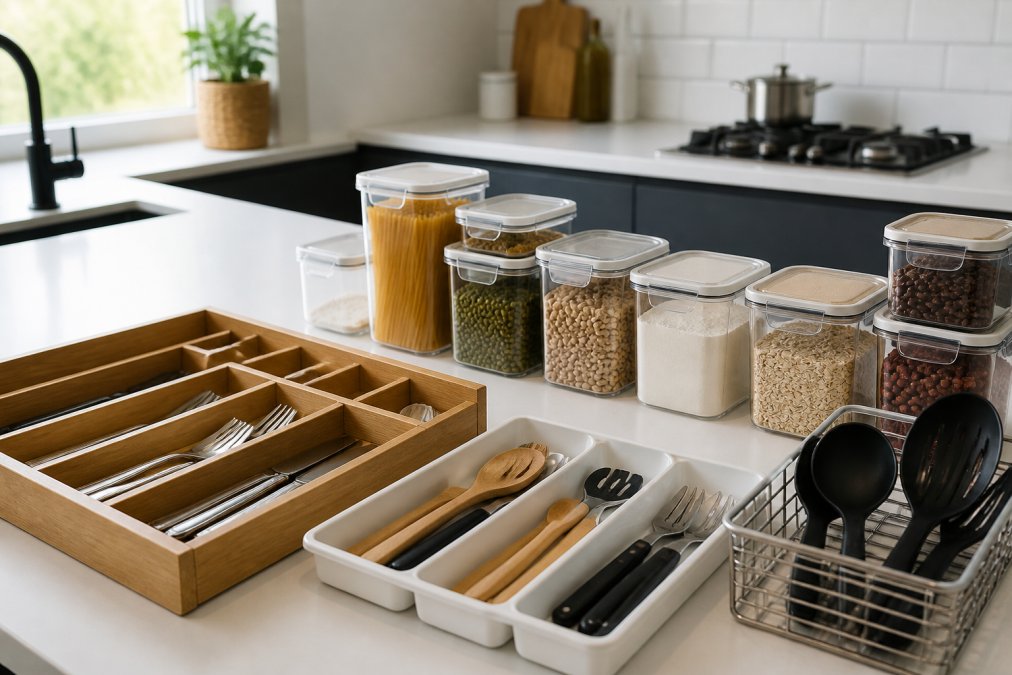
Best Kitchen Drawer Organizers for Every Type of Utensil
Junk drawers happen because utensils have nowhere else to go, forcing you to dig through chaos to find what you need.
Drawer dividers create zones by function: cooking tools, measuring tools, and serving utensils separate. This five-minute setup saves minutes daily.
Material Matters for Safety and Durability
Quality organizers use food-grade polypropylene or BPA-free plastic. Bamboo naturally resists moisture and bacteria. Avoid PVC organizers, which can leach chemicals over time.
Stainless steel dividers last indefinitely but cost more. Silicone-lined compartments prevent scratching. Verify plastic organizers are top-rack dishwasher safe only.

Accessibility and Ergonomic Design
For those with limited grip strength or mobility challenges, choose dividers with raised edges to prevent sliding, wider compartments to reduce pinching, and pull-out inserts requiring minimal force.
Avoid organizers with sharp edges or tight compartments that force awkward handle manipulation.
Vertical vs. Horizontal Storage
Vertical dividers work best for long-handled utensils; shallow compartments prevent smaller items from sliding. Choose adjustable organizers to expand or shrink sections as your collection changes.
Tiered organizers bring utensils closer to eye level and reduce reaching distance.
Maintenance and Cleaning
Hand wash plastic and bamboo organizers with warm soapy water and dry thoroughly. Stainless steel dividers are top-rack safe. Never soak bamboo; wipe and air dry to prevent swelling.
Check organizers quarterly for cracks, warping, or loose compartments. Replace damaged ones promptly.
Keep your primary drawer focused on everyday tools used weekly. Use a secondary drawer for backup or seasonal items to prevent overflow.
Kitchen Pantry Organization Hacks for Maximum Space Efficiency
Pantry organization prevents duplicate purchases. The problem isn't usually lack of space, it's visibility and rotation.
Use airtight stackable containers for cereal, pasta, flour, sugar, and snacks. Clear containers let you see contents and expiration dates. Label with product name and opening date to prevent expired items from hiding.
Rotating trays are game-changers for deep shelves. A lazy susan or rotating tray brings items from the back to the front without reaching or climbing. This is especially useful for oils, spices, condiments, and jarred items. You use what you can see, so rotation prevents waste.
Kitchen Sink Drain Basket Organizer →
Vertical space matters in pantries more than anywhere else. Install shelves all the way to the ceiling if your pantry has height to spare. Use the top shelves for items you access rarely, holiday baking supplies, bulk purchases, backup stock. Eye-level shelves should hold your everyday staples. Low shelves work for heavier items or things kids can safely reach.
Sink and Prep Area Organization for Better Kitchen Workflow
Your sink area is either efficient or it's a bottleneck. Clutter around the sink slows prep work, makes cleanup harder, and makes the whole kitchen feel cramped.
The Kitchen Sink Drain Basket Organizer ($10.99) solves the first problem: where do soaps, sponges, and fresh produce go while you're prepping? This triangular organizer fits snugly in any sink corner, using suction cups to mount without drilling. It's rust-proof, waterproof, and designed with drainage holes so water doesn't pool. Use it as a cleaning tool holder, fruit basket, or temporary bin for vegetable scraps.

For drying dishes and produce, the Retractable Stainless Steel Sink Rack ($24.99) expands your workspace instantly. It rolls up for compact storage when not in use, and it's dishwasher safe. Made from rust-resistant stainless steel and food-grade silicone, it handles fruits, vegetables, dishes, and defrosting meat without mess or wasted counter space.
The Foldable Kitchen Chopping Board ($22.99) transforms prep work. It functions as a chopping board, dish tub, drain basket, or storage bin. The built-in drain plug lets you rinse vegetables directly in the board without splashing. For small apartments, this foldable design collapses to fit in tight cupboards. It's made from BPA-free, food-grade material that's tough and stain-resistant.

Keep your prep area clear by assigning specific zones: a cutting area, a washing area, and a drying area. Move items through these zones rather than letting everything pile up in one spot. This workflow prevents cross-contamination, speeds up cooking, and makes cleanup faster.
Food Storage and Preservation Tools That Keep Ingredients Fresh
Fresh food spoils when exposed to air, moisture, and temperature fluctuations. The right storage tools extend shelf life and reduce waste.
The Mini Heat Bag Sealer ($14.99) reseals bags with a single slide. It locks out air and moisture better than clips or ties, keeping snacks, dried fruits, and tea leaves fresh and crispy. The portable design fits in your hand or bag, making it perfect for on-the-go use. It uses two AA batteries and works on bags up to 0.1 cm thick.
For serious food preservation, the Mini Automatic Vacuum Sealer Pump ($23.99) removes air from bags automatically. One-button operation makes it effortless. The compact design takes minimal counter space, and it's USB-rechargeable. Use it for meal prep, leftovers, or organizing pantry items. It blocks odors, bugs, and dust with airtight, watertight seals.
The Vacuum Seal Food Cover ($17.99) works differently. Place it over a dish, press gently, and it creates a vacuum seal that locks in freshness. It's microwave and refrigerator safe, dishwasher safe, and includes a built-in date button to track storage time. Universal fit means it works on most plates and dishes. This is ideal for leftovers that don't fit in containers or for sealing prepared meals before refrigerating.
These tools work together. Use the vacuum sealer for bulk storage and meal prep. Use the heat sealer for resealable bags of snacks and dry goods. Use the food cover for leftover dishes. Combined, they reduce food waste and save money on groceries.
Maintenance and Longevity: Keeping Your Organization System Working
Organization systems fail when tools break or wear out. Durability matters because you'll use these items daily. But maintenance goes beyond just replacing broken pieces, it includes cleaning protocols, material-specific care, and leveraging technology to prevent clutter from returning.
Material-Specific Cleaning and Care
Most quality organizers are made from food-grade plastic, silicone, stainless steel, or bamboo. Each requires different care:
Plastic organizers (polypropylene or BPA-free): Hand wash with warm soapy water and dry immediately. Do not place in the dishwasher, even on the top rack, high heat causes warping and can compromise seals on vacuum containers. Wipe monthly with a damp cloth to remove dust. If staining occurs, soak in a solution of equal parts white vinegar and water for 15 minutes, then scrub gently with a soft brush.
Stainless steel dividers and racks: Dishwasher safe, but hand washing preserves the finish longer.
Preventing Clutter Creep with Quarterly Audits
Smart Home Integration for 2026
Replacing Worn Items Promptly
Frequently Asked Questions
What are the biggest kitchen organization trends for 2026?
The top trends center on modular storage systems that adapt to different kitchen sizes, vertical space utilization to maximize storage without expanding footprint, and airtight sealing solutions for food preservation. Stackable containers, customizable drawer inserts, and multifunctional tools that serve dual purposes are dominating. Sustainability matters too, reusable, food-grade materials and eco-friendly designs are increasingly prioritized over single-use plastic solutions.
How can I organize small kitchen cabinets effectively?
Start by assessing what you actually use regularly. Install shelf risers to create vertical layers and double your storage capacity. Use expandable organizers and pull-out drawers to maximize accessibility without removing everything to find one item. Store frequently used items at eye level. Group similar items together using labeled containers. For deep cabinets, rotating trays or lazy susans prevent items from getting lost in the back. Removing items from bulky packaging and using stackable, uniform containers creates visual order and saves significant space.
What is the best kitchen utensil organizer for deep drawers?
Customizable drawer dividers work best for deep drawers because they adapt to your specific utensil collection. Look for adjustable systems that let you create compartments of varying sizes. Vertical storage within the drawer (using risers or tiered organizers) prevents utensils from shifting and makes everything visible at a glance. For accessibility, position frequently used tools toward the front. Drawer inserts with rubber or silicone grips prevent items from sliding around during daily use.
Which kitchen storage solutions are most durable for long-term use?
Stainless steel and high-quality ABS plastic withstand daily wear far better than thin materials. Look for products with rust-resistant finishes, food-grade certifications, and BPA-free construction. Suction-cup mounted organizers should have strong grips rated for heavy loads. Airtight sealing systems with silicone gaskets maintain integrity over years of repeated opening and closing. Avoid products with sharp edges or flimsy hinges that break under regular use. Reading product specifications for material composition and weight capacity helps identify tools built to last.