

How to Maintain Tidy Kitchen Counters: A Daily System
Table of Contents
- Why Kitchen Counters Get Cluttered (And Why It Matters)
- The Foundation: Decluttering Your Kitchen Counters First
- Kitchen Counter Organization Ideas That Actually Work
- Your Daily Kitchen Cleaning Routine to Keep Counters Clear
- How to Organize Small Kitchen Cabinets for Counter Relief
- Managing Cords, Soap, and Sink Clutter
- Maintaining Your System: Weekly and Monthly Habits
- Frequently Asked Questions
Last Updated: September 2, 2026
Why Kitchen Counters Get Cluttered (And Why It Matters)
Your kitchen counter isn't just a surface, it's the command center of your home. When it's cluttered, everything feels harder. You can't find what you need. Cooking takes longer. Cleaning becomes a chore instead of a habit.
The real problem isn't that clutter happens. It's that most people treat decluttering as a one-time event instead of a system. You clear the counters once, feel great for a week, and then the same items creep back. This cycle repeats endlessly.
The difference between a kitchen that stays tidy and one that constantly feels chaotic comes down to one thing: intentional living. Not perfection. Not minimalism for its own sake. Intentional living means every item on your counter has a purpose and a home. It means you've built habits that prevent clutter from accumulating in the first place.
At Oatmehome, we focus on systems rather than willpower to help maintain tidy kitchen counters. The approach is straightforward: declutter once, organize strategically, then maintain with daily habits. This guide walks you through each step so you can build a kitchen counter system that actually sticks.
The Foundation: Decluttering Your Kitchen Counters First
Before you organize anything, you need to declutter. This is non-negotiable.
Pull everything off your counters and sort it into three piles: keep, donate, and trash. Be ruthless. If you haven't used it in the past month, it doesn't belong on your counter (the NIH). Kitchen gadgets that promised to change your life but sit unused? Gone. Decorative items that collect dust? Donate them.
This step feels uncomfortable because it forces you to confront psychological barriers. You might feel guilty throwing away a gift. You might think "I'll use this someday" even though you never do. You might keep something out of obligation rather than actual need.
Push through that discomfort. Your counter space is valuable real estate. Every inch you claim back is an inch you can use for actual cooking and food prep. Once you've decluttered, you'll notice something shifts, maintaining tidy kitchen counters suddenly becomes possible because you're not fighting against excess.
Keep only items you use daily or at least weekly. Everything else goes into cabinets, drawers, or storage. This single decision, keeping only high-use items visible, is the foundation of a counter that stays tidy.
Kitchen Counter Organization Ideas That Actually Work
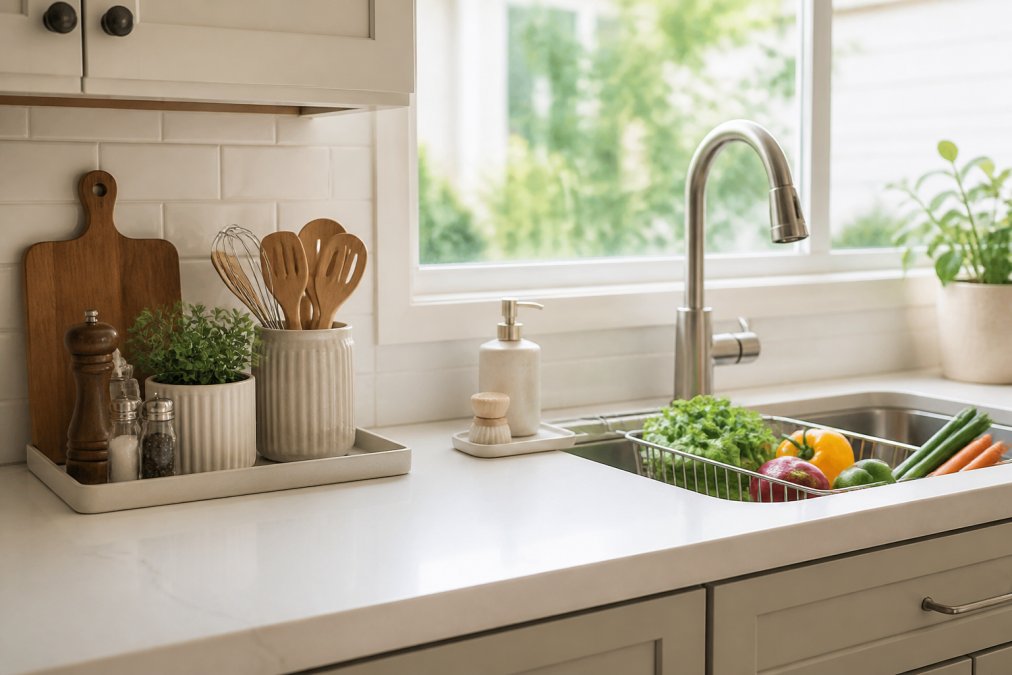
Once you've decluttered, organization becomes simple because you're working with less. The goal is to create zones where similar items live together, making it easy to find what you need and put things back where they belong.
The Home Principle: Every Item Needs a Place
Every item on your counter should have a designated home. Not a vague "somewhere in that area", a specific spot. This principle alone transforms how you maintain tidy kitchen counters because returning items becomes automatic instead of a decision.
Start by grouping similar items: cooking utensils, cleaning supplies, soap and sponges, fresh produce. Assign each group a specific location on your counter. Your utensil holder lives next to the stove. Your cleaning supplies live in a corner near the sink. Your soap and sponges have their own caddy. Once items have homes, putting them back takes seconds instead of minutes.
The psychological benefit is real. When everything has a place, your brain stops working so hard to maintain order. You're not deciding where something goes, you already know. This reduces decision fatigue and makes the system sustainable long-term.
Using Trays and Zones to Group Daily-Use Items
Trays are one of the most underrated organization tools for maintaining tidy kitchen counters. They visually contain items, prevent them from spreading across the surface, and make it easy to move groups of items when you need counter space.
Use small trays or containers to group your daily-use items. One tray holds your coffee setup if you brew at home. Another holds cooking oils and vinegars if you use them frequently. A third holds soap, sponges, and cleaning cloths near your sink. Each tray creates a visual boundary that prevents items from migrating across your counter.
The key is choosing trays that fit your counter's aesthetic. Marble trays, bamboo trays, or simple stainless steel options all work. The material matters less than the function: containing items and creating visual zones. When guests visit, your counter looks intentional and organized rather than cluttered, even though you have the same number of items.
Appliance Garages and Hidden Storage Solutions
Large appliances, coffee makers, toasters, blenders, take up significant counter space. If you use them daily, they belong on your counter. If you use them occasionally, they belong in an appliance garage or cabinet.
An appliance garage is a cabinet or enclosed shelf that hides items from view while keeping them accessible. You can buy a ready-made appliance garage or use a deep cabinet with a door. The point is to keep less-frequently-used appliances out of sight so your counter stays visually clear.
For items you use every single day, your coffee maker, for example, a permanent spot on the counter is fine. Just make sure it has a dedicated location and you return it to that spot after each use. This prevents the "appliance creep" where small items gradually colonize your counter until you can barely see the surface.
Vertical storage is your friend here. Wall-mounted shelves, pegboards, or magnetic strips can hold frequently-used items without consuming precious counter space. A magnetic strip for knives, a pegboard for cooking utensils, or floating shelves for frequently-used ingredients all keep items accessible while freeing up your counter.
Your Daily Kitchen Cleaning Routine to Keep Counters Clear
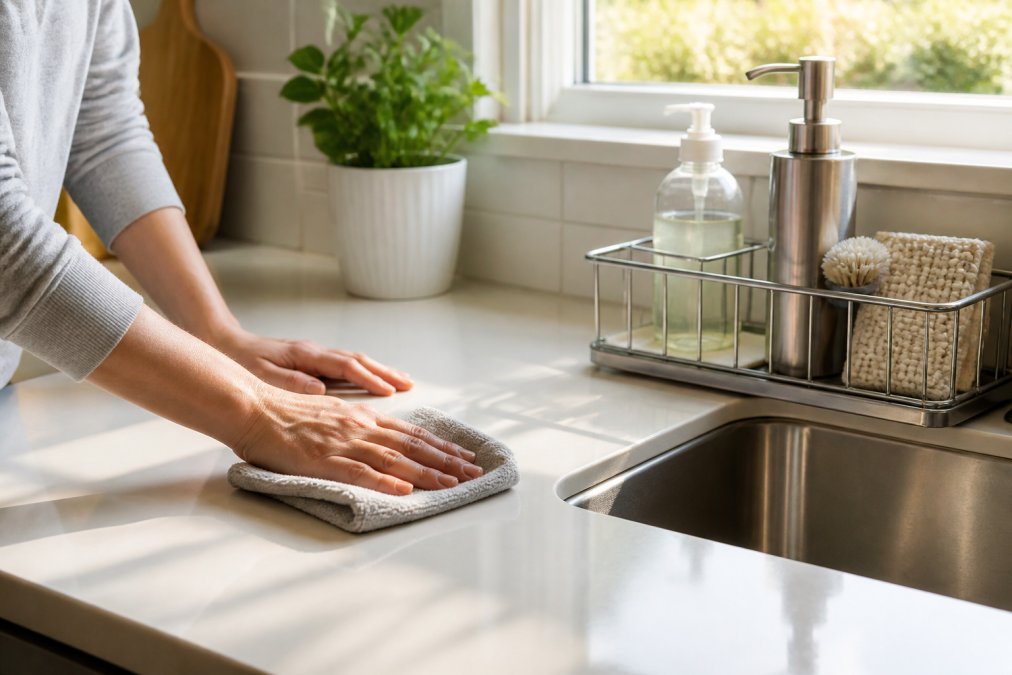
Organization alone won't maintain tidy kitchen counters. You need daily habits that prevent clutter from accumulating. The good news: these habits take minutes, not hours.
The Clean-as-You-Go Method
Clean as you go. This single habit prevents 80% of counter clutter (peer-reviewed research).
The moment you finish using something, put it away. Don't set it down "for now" with the intention of putting it away later. Later never comes. Instead, return items to their homes immediately. Dirty dishes go in the sink or dishwasher. Cooking utensils go back in their holder. Ingredients go back in cabinets.
This habit feels slow at first because you're interrupting your workflow. But after a week, it becomes automatic. You'll find yourself putting things away without thinking about it. And your counter will stay visibly clear throughout the day instead of becoming a disaster zone by evening.
The psychological benefit is significant. A clear counter reduces mental load. You're not constantly aware of clutter in your peripheral vision. Your brain can focus on cooking, conversation, or whatever you're actually doing instead of registering visual chaos.
Evening Reset Ritual
Before bed, spend five minutes doing a counter reset (the CDC). This is your nightly maintenance routine.
Clear any remaining items from your counter. Wipe down surfaces with a damp cloth to remove crumbs, spills, and grime buildup. Return everything to its designated home. Empty the sink if anything is sitting there. By the time you finish, your counter is clean and ready for the next day.
This ritual takes less time than scrolling your phone but has an outsized impact on how your kitchen feels. You wake up to a clean counter instead of yesterday's mess. Starting your day with a tidy space sets the tone for everything that follows. You're more likely to maintain that cleanliness throughout the day because you started with a clean slate.
Make this ritual non-negotiable. Treat it like brushing your teeth, something you do every single night regardless of how tired you are. The consistency matters more than the perfection. Some nights you'll do a thorough cleaning. Other nights you'll just do a quick wipe and put things away. Both count.
How to Organize Small Kitchen Cabinets for Counter Relief
Maintaining tidy kitchen counters becomes much easier when your cabinets are organized. If your cabinets are chaotic, items end up on the counter because you can't find space inside.
Use vertical dividers or shelf risers to maximize cabinet space. Stack items efficiently so you can fit more without creating a jumbled mess. Label shelves or containers so you know where things belong. When your cabinets are organized, putting items away takes seconds instead of minutes, which makes the clean-as-you-go method actually sustainable.
For small kitchens or apartments, cabinet organization is critical. Every inch of counter space matters. By organizing your cabinets first, you create homes for items that would otherwise live on your counter. This is especially important if you have limited counter space to begin with.
Consider using drawer inserts, shelf organizers, or clear containers to maximize space. You can fit significantly more items in the same cabinet when everything is organized vertically and clearly labeled. This frees up counter space for actual cooking and food prep.
Managing Cords, Soap, and Sink Clutter
Your sink area deserves special attention because it's the most cluttered zone in most kitchens.
Soap, sponges, dish towels, and cleaning supplies all congregate around your sink. Without a system, this area becomes a visual mess that makes your entire counter look chaotic. The solution is simple: give each item a specific home.
Use a soap holder for your dish soap. A drain basket organizer keeps sponges and cleaning cloths contained. If you have a soap dispenser, the Oatmehome Double Layer Sponge & Soap Rack combines both functions, it holds your soap dispenser and sponge in one compact unit, keeping your sink area organized while making dish cleaning more efficient.

For cords from small appliances or phone chargers that live near your kitchen, use cord organizers or clips to keep them from tangling across your counter. Route cords along the back of your counter or behind appliances where they're out of sight. Visible cords create visual clutter even if the counter itself is clean.
A retractable sink rack solves multiple problems at once. It provides space for draining dishes, fruits, and vegetables while rolling up for storage when you're not using it. This keeps your counter clear instead of having a permanent dish rack taking up space.
Maintaining Your System: Weekly and Monthly Habits
Once you've built your system, maintaining tidy kitchen counters requires minimal effort if you stay consistent with daily habits. But adding weekly and monthly maintenance prevents grime buildup and keeps everything functioning smoothly.
Weekly: Deep clean your counter surfaces. Wipe down with appropriate cleaner based on your counter material. Check that items are still in their designated homes. Reorganize any trays or zones that have shifted. This takes 10-15 minutes and keeps your system from slowly degrading.
Monthly: Declutter again. Remove items that have accumulated but aren't being used. Check expiration dates on products. Reorganize cabinets if they've become chaotic. This prevents the slow creep of clutter that eventually forces a major reset.
The maintenance schedule matters because it prevents small problems from becoming big ones. A few minutes of weekly attention is infinitely easier than a major decluttering project every six months. Consistency beats intensity every time.
Maintaining tidy kitchen counters isn't about willpower or perfectionism. It's about building a system that makes tidiness the default instead of the exception. Start by decluttering ruthlessly, organize with intention, and commit to daily habits. Within a week, you'll notice your kitchen feels calmer and more functional. Within a month, maintaining tidy kitchen counters will feel automatic.
At Oatmehome, we've designed products specifically to support this system. Our [Kitchen Sink Drain Basket Organizer(/products/household-sink-hanging-fruit-and-vegetable-filter-water-drain-basket-kitchen-dry-and-wet-separation-swan-drain-basket) | oatmehome.com] keeps your sink area contained and functional. Our retractable drain racks and soap holders eliminate clutter while making daily tasks easier. Shop our full range of kitchen organization solutions and start building your system today.
Frequently Asked Questions
Q: What should you not keep on kitchen counters?
A: Avoid storing single-use appliances, expired items, decorative knick-knacks you don't use, old mail, or anything broken. Keep only daily-use items that serve a function or bring intentional value. Everything else belongs in cabinets, drawers, or storage. This principle reduces visual clutter and makes your counter easier to clean and maintain.
Q: How do you organize kitchen counters with limited space?
A: Use vertical storage by installing wall-mounted racks or shelves. Group similar items in drawer inserts or small containers. Store appliances in an appliance garage or deep cabinet. Use the space under your sink for cleaning supplies with a rack. In small apartments, every inch counts, prioritize multi-functional tools that serve multiple purposes and take up minimal surface area.
Q: What are the best daily habits for a clutter-free kitchen?
A: Practice the clean-as-you-go method: wipe spills immediately, return items to their home after use, and wash dishes right away. Each evening, spend 5 minutes resetting your counter by clearing everything unnecessary. Use a tray to corral frequently used items like soap and sponges, the Double Layer Sponge & Soap Rack ($14.99) combines storage and function. Consistent small actions prevent grime buildup and keep your kitchen workflow efficient.
Q: How often should you deep clean kitchen counters to maintain them?
A: Deep clean your counters weekly using appropriate cleaners for your surface type (stone cleaner for granite or marble, mild soap for laminate). Daily wiping prevents grime buildup, but a thorough weekly scrub removes residue and keeps surfaces looking fresh. Monthly, move items completely and clean underneath, this prevents clutter from accumulating in hidden spots and maintains the aesthetic of your countertop long-term.
This article was written using GrandRanker