

How to Maximize Apartment Storage Space
Table of Contents
- What You'll Need Before You Start Organizing
- Step 1: Declutter First to Maximize Apartment Storage Space
- Step 2: Vertical Storage Solutions for Apartments
- Step 3: Multi-Functional Furniture for Small Spaces
- Step 4: Small Apartment Organization Hacks That Actually Work
- Step 5: Maximize Apartment Storage Space on Any Budget
- Common Mistakes to Avoid When Organizing a Small Apartment
- Conclusion
Last Updated: August 29, 2026
What You'll Need Before You Start Organizing
Learning how to maximize apartment storage space starts before you buy a single bin or shelf. The biggest mistake most renters make is skipping straight to shopping, which results in organizers that don't fit and clutter that simply relocates rather than disappears.
Before you touch a single drawer, gather these essentials:
- A measuring tape (measure every wall, nook, closet, and door gap)
- Masking tape and a marker to label zones temporarily
- Three boxes or bags labeled Keep, Donate, and Discard
- A notepad to sketch your floor plan and identify dead zones
Apartment storage space is a finite resource. The goal isn't to fit more stuff in, it's to make every square foot work harder. For renters specifically: check your lease before drilling into walls or installing permanent fixtures. Many landlords allow command strips, tension rods, and freestanding units without issue, but permanent modifications can cost you your security deposit.
Step 1: Declutter First to Maximize Apartment Storage Space
You cannot organize clutter. You can only move it around. Decluttering is the single highest-use step in any apartment storage overhaul and should happen before you spend a dollar on solutions.
The Keep, Donate, Discard Method
The Keep, Donate, Discard method is a three-category sorting system that forces a decision on every item you own, eliminating the vague "maybe" pile that derails most decluttering efforts.
Work room by room, not category by category. Pull everything out of a space, place it on the floor or bed, and handle each item once. Ask one question: does this item serve a function in my life right now? If the answer is no, it goes to Donate or Discard. If you haven't used it in over a year, it almost certainly belongs in one of those two piles.
Many people discover they free up 20-30% of usable storage simply by removing what they don't use.
Going Paperless to Eliminate Hidden Clutter
Paper is one of the most underestimated sources of apartment clutter. Bills, manuals, receipts, takeout menus, and expired coupons accumulate silently and take up space you could use for things you actually need.
Going paperless replaces physical paper with scanned or downloaded digital files, accessible from any device. Scan important documents with a free smartphone app and store them in a cloud folder organized by category. Opt into digital billing and statements for every account that allows it. According to the Consumer Financial Protection Bureau's guidance on electronic records, most financial institutions are required to offer electronic statement options.
Shred and discard anything you've digitized. The result is an immediate, cost-free reduction in clutter that frees up entire drawers and filing areas.
Step 2: Vertical Storage Solutions for Apartments
Most apartments use less than half their available vertical space. Walls extend from floor to ceiling, but most renters store things only at waist height and below.
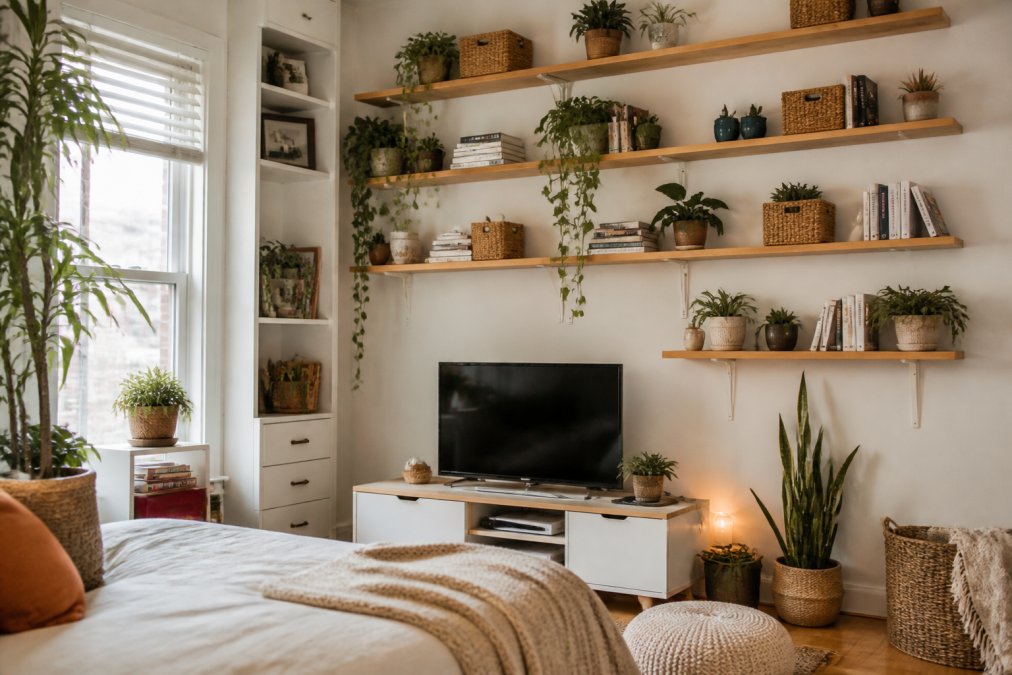
Vertical storage organizes items along the height of a wall or tall unit rather than spreading them across floor space, dramatically increasing usable storage without expanding the room's footprint.
Wall-Mounted Shelving and Floating Shelves
Floating shelves are the most versatile vertical storage tool available for apartments. Install them in unexpected places: above the toilet, beside the front door, over the desk, or flanking a window. Shelves placed 12 inches apart work for most items; 18 inches apart can hold larger bins and baskets.
Open shelving works best when items are grouped intentionally. Bins and baskets hide visual chaos while keeping categories accessible. Label them clearly and resist overfilling.
Rental-Friendly Vertical Storage Options
Several vertical storage solutions require zero permanent modifications:
- Tension pole shelving units press between floor and ceiling with no hardware required.
- Freestanding ladder shelves lean against the wall and offer multiple tiers.
- Over-door organizers hang from any door and add instant storage for shoes, supplies, or toiletries.
- Command strip hooks and rails hold surprising amounts of weight when installed correctly and remove cleanly.
The U.S. Department of Housing and Urban Development's tenant rights overview notes that tenants should review their lease for modification restrictions before making any changes. Rental-friendly solutions protect your deposit while optimizing vertical space.
Step 3: Multi-Functional Furniture for Small Spaces
The wrong furniture destroys a small apartment. A single-purpose couch, a coffee table that only holds drinks, a bed frame with nothing underneath: these waste square footage you can't afford to lose.
Multi-functional furniture for small spaces serves two or more distinct purposes, such as a bed with built-in drawers, a dining table that folds flat, or a bench that opens to reveal storage inside.
Storage Ottomans, Convertible Beds, and Room Dividers
Storage ottomans function as seating, a footrest, a coffee table surface, and a storage container simultaneously. A large storage ottoman can hold extra blankets, board games, charging cables, or seasonal items while looking intentional and clean.
Convertible beds and murphy beds are transformative in studio apartments. A murphy bed folds flat against the wall during the day, freeing the entire floor plan for other uses. Many modern murphy beds integrate desk surfaces or shelving into the same wall panel.
Room dividers with built-in shelving define zones in an open-plan studio while providing storage on both sides, useful for separating sleeping and living areas without sacrificing storage.
Every piece of furniture should earn its floor space by doing more than one job.
Step 4: Small Apartment Organization Hacks That Actually Work
Small apartment organization hacks that genuinely change how a space functions differ from aesthetic tricks that look good in photos but don't hold up in daily life.
Closet Organization Hacks
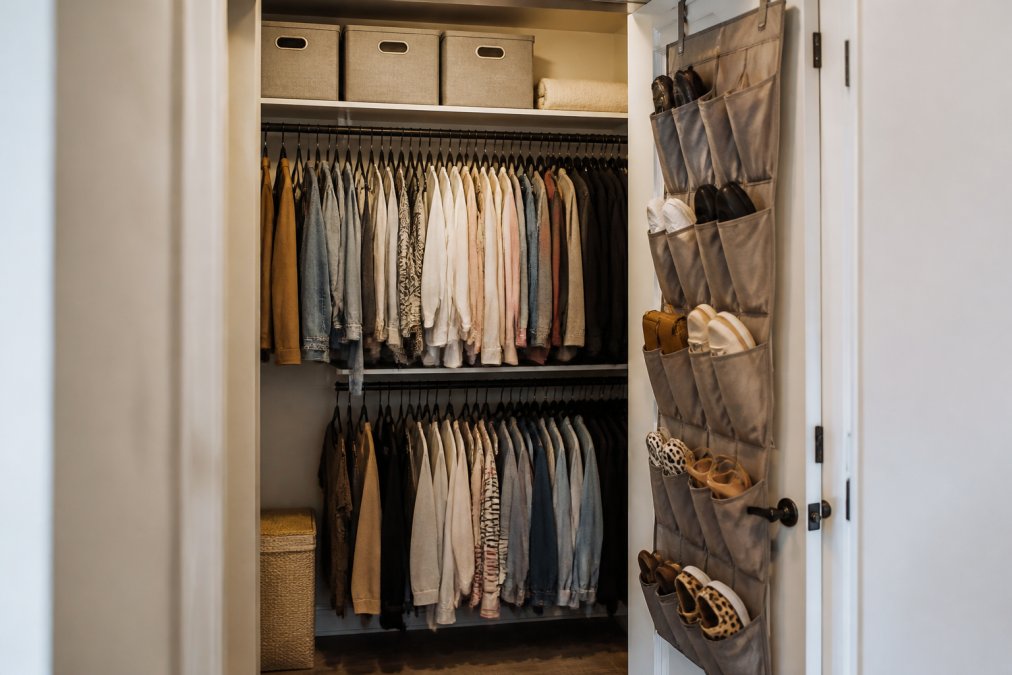
A standard apartment closet, with a single rod and a shelf above it, wastes the bottom two-thirds of the closet and ignores the door entirely.
Start with slim hangers. Switching from bulky plastic hangers to slim velvet hangers can increase closet rod capacity by nearly double. Add a second closet rod below shorter hanging items like shirts and jackets to use the space beneath longer items.
Stackable bins and baskets on the shelf above the rod keep folded items, accessories, and seasonal pieces organized and visible. Use the closet door with an over-the-door shoe organizer that holds belts, scarves, cleaning supplies, snacks, or bathroom products.
Under-Bed Storage and Door-Back Solutions
Under-bed storage is the most consistently overlooked apartment storage space. Flat, wheeled storage bins designed for under-bed use slide in and out easily, keep items dust-free, and work with most bed heights. Use them for seasonal clothing, extra linens, shoes, or anything you need occasionally but not daily.
If your bed sits too low for standard bins, bed risers lift the frame several inches, instantly creating usable clearance.
Door-back storage extends beyond the closet. The backs of bathroom doors, pantry doors, and kitchen cabinet doors are all viable storage surfaces. Slim over-door organizers, adhesive hooks, and mounted racks add storage to surfaces that would otherwise go unused.
Step 5: Maximize Apartment Storage Space on Any Budget
Budget shapes strategy, but it doesn't have to limit results. The most effective apartment storage transformations often cost less than people expect, because the highest-impact changes are behavioral, not material.
Here's a tiered approach based on what you're working with:
| Budget Tier | Priority Actions | Best-For |
|---|---|---|
| Zero spend | Declutter, reorganize existing furniture, go paperless | Immediate impact with no investment |
| Low spend | Slim hangers, tension rods, over-door organizers, stackable bins | Closet and cabinet optimization |
| Mid spend | Floating shelves, storage ottomans, under-bed bins, ladder shelves | Whole-room transformation |
| Higher spend | Murphy beds, modular shelving systems, convertible furniture | Studio apartments and long-term renters |
Start at the top of the table and work down. Many people discover that decluttering and reorganizing alone solve most storage problems before they spend anything.
When you do invest in storage products, prioritize quality over quantity. A single well-made storage ottoman or durable stackable bins will outperform a collection of cheap organizers that warp or fail within months. According to the National Multifamily Housing Council's renter research, a large and growing share of American households live in rental apartments, many in smaller units where storage is a genuine constraint.
Common Mistakes to Avoid When Organizing a Small Apartment
Most small-space organization projects fail for the same handful of reasons.
Buying storage before decluttering. Organizers bought before a purge end up holding things you don't need, and you run out of space again within weeks.
Ignoring vertical space. Floor-level thinking is the enemy of apartment storage. If your walls aren't working, you're leaving your best storage real estate unused.
Choosing aesthetics over function. Open shelving looks beautiful in design photos but requires constant maintenance to stay clutter-free. Be honest about your habits before committing to a fully open system.
Underestimating the door. Every door in your apartment is a storage surface. Most people use none of them.
Optimizing for the best-case scenario. Design your storage system for how you actually live, not for a version of yourself who folds everything perfectly. Systems that work with your habits outperform systems that require you to change them.
Skipping measurements. A shelf that's two inches too wide, a bin that doesn't fit the cabinet, or a bed riser that's too tall wastes money and creates more clutter.
As the American Psychological Association's research on clutter and stress has documented, disorganized living environments are consistently linked to elevated stress and reduced cognitive focus. Getting apartment storage right changes how the space feels to live in.
Small apartment living comes with real constraints, but a disorganized space doesn't have to be one of them. The strategies in this guide, from decluttering and going vertical to choosing multi-functional furniture and using every door, give you a complete framework for transforming how your apartment storage space works. Oatmehome offers a curated selection of practical storage and organization products designed specifically for everyday apartment life, from bathroom accessories to kitchen essentials and home organization tools built for compact spaces. Shop Now and find the solutions that make your space work harder without making your life more complicated.
Frequently Asked Questions
How can I use vertical space to maximize apartment storage?
Mount floating shelves above eye level on empty walls, use tall bookcases that reach close to the ceiling, and add stackable bins or modular units in closets. Over-the-door organizers on the backs of closet and bathroom doors also reclaim vertical footprint without taking up floor space. The goal is to move storage up the wall so your floor plan stays open and the room feels larger.
What furniture is best for maximizing apartment storage space?
Multi-functional furniture does the most work in a small apartment. Storage ottomans double as seating and hidden storage compartments. Bed frames with built-in drawers replace the need for a separate dresser. Convertible sofas and wall-mounted fold-down desks free up square footage when not in use. When choosing pieces, prioritize items that serve at least two purposes so every item earns its place in the floor plan.
What are some clever storage ideas for a small apartment?
Slim hangers can nearly double closet rod capacity. Magnetic strips in the kitchen hold knives and small tools on the wall. Tension rods inside cabinets create dividers for baking sheets and cutting boards. Under-bed storage boxes on wheels handle seasonal items. Labeling bins and baskets keeps everything easy to find and maintains a clutter-free look without requiring a major renovation or permanent modifications.
How do I declutter to make more room in my apartment?
Work through one room at a time using a simple keep, donate, or discard method. Handle every item once and ask whether you have used it in the past year. Digitize paper documents, receipts, and manuals to eliminate paper clutter entirely. Once you have removed what you do not need, you will often find you have enough storage already, the problem was excess belongings, not a lack of space.
This article was written using GrandRanker