

How to Organize Kitchen Cabinets Efficiently
Table of Contents
- Decluttering Kitchen Cabinets: The Essential First Step
- Assess Your Cabinet Layout and Space
- Best Kitchen Cabinet Organizers to Maximize Vertical Storage
- How to Organize Kitchen Drawers for Daily Efficiency
- Implement a Kitchen Organization System That Works
- Small-Space Solutions for Apartment Kitchens
- Budget-Friendly DIY Hacks for Cabinet Organization
- Maintain Your Organization System Long-Term
- Frequently Asked Questions
Last Updated: September 23, 2026
Decluttering Kitchen Cabinets: The Essential First Step
Before you can organize kitchen cabinets efficiently, you need to clear out what doesn't belong. Most people skip this step and jump straight to buying organizers, ending up with expensive containers holding things they don't need.
Remove everything from one cabinet at a time and place items on your counter or table so you can see what you actually have.
Sort items into three piles: keep, donate, and trash. Be honest about what you use. If you haven't used a serving dish in two years, it's taking up space you need for things that matter.
Common items to declutter include:
- Duplicate tools or gadgets
- Chipped or damaged dishes
- Expired spices or food items
- Single containers without lids
- Appliances you never use
Move to the next cabinet once you've decluttered one. This foundation work reduces clutter and improves visibility of what stays.
Assess Your Cabinet Layout and Space
Measure the height, width, and depth of each cabinet and note obstacles like pipes, electrical outlets, or uneven shelves. This determines what organizers will work and who can safely access them.
Check whether cabinet doors open fully and if door-mounted storage will block access, these details matter for vertical storage planning.
Check if shelves are adjustable; they let you create different heights for different items.
Ergonomic Reach Zones and Accessibility
If your household includes elderly members, people with mobility limitations, or anyone with arthritis or back issues, cabinet layout must account for safe reach ranges.
The optimal reach zone for most adults is 24-72 inches from the floor. Daily-use items should live in this band.
For wheelchair users or people of shorter stature, prioritize the 15-48 inch range for their most-used items.
Keep heavy items (cast iron, large serving dishes, bulk goods) in lower or mid-level cabinets, a 5-pound Dutch oven falling from a high shelf is a safety hazard.
Pull-out racks or sliding shelves bring items forward without deep reaching, especially valuable for corner cabinets.
If you rent, use stackable step stools or pull-out organizers on existing shelves for non-permanent accessibility improvements.
Workflow and Frequency-Based Placement
Consider whether you need quick access to everyday dishes or store specialty items rarely used, this influences placement.
Organize based on your actual kitchen workflow: keep prep items near your cooking zone and plates close to the dishwasher.
Store items close to where you use them (prep, cooking, serving, cleanup zones) to reduce walking and improve efficiency.
Best Kitchen Cabinet Organizers to Maximize Vertical Storage
Vertical storage maximizes small kitchens, stack items smartly to use full cabinet height without creating unstable towers.
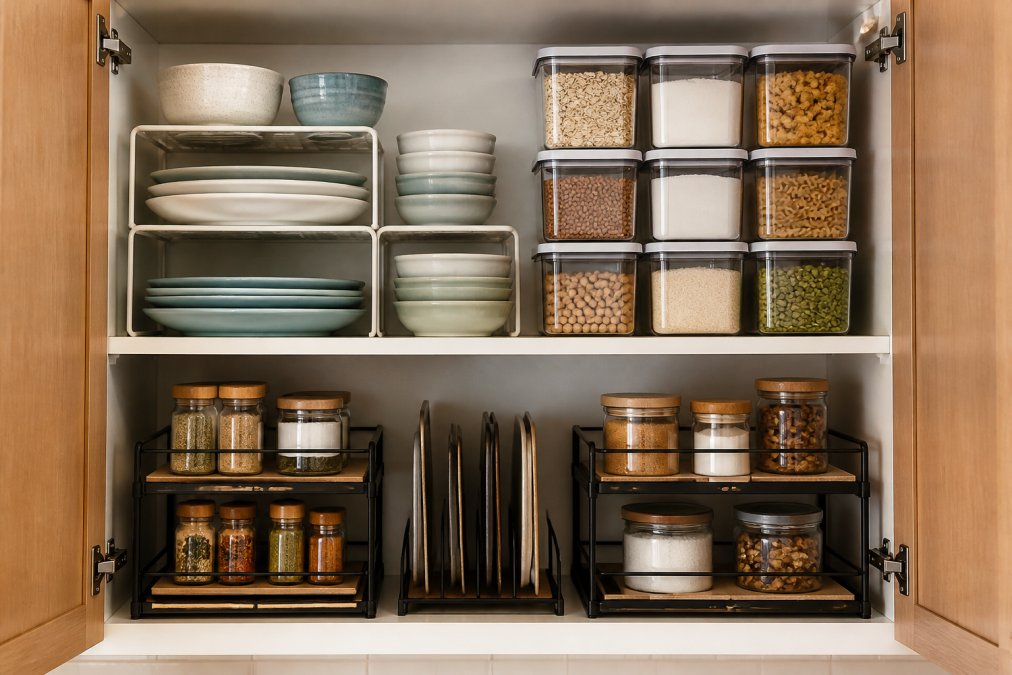
Shelf Risers and Stackable Containers
Shelf risers create a second level, doubling storage space by adding 4-6 inches of height.
Clear stackable containers for dry goods let you see contents without opening them, saving time when cooking.
Pull-Out Racks and Turntables
Pull-out racks slide out like drawers, giving easy access to items at the back of deep cabinets.
Turntables rotate for all-side access without moving containers, ideal for spices, oils, and condiments.
Both solutions improve accessibility and encourage actual use, reducing waste.
Modular Inserts and Drawer Dividers
Modular inserts are customizable compartments you arrange to match your items; adjustable ones reconfigure as needs change.
Drawer dividers keep everything in its designated spot, preventing items from shifting.
How to Organize Kitchen Drawers for Daily Efficiency
Organized kitchen drawers make cooking faster; disorganized ones waste time.
Categorize and Zone Your Drawers
Assign each drawer a purpose (utensils, gadgets, linens) so it's obvious where things belong.
Group similar items together so everyone knows where to find and return them.
Kitchen Sink Drain Basket Organizer →
Your most-used items should live in the most accessible drawer. If you use wooden spoons every day, they go in the top drawer closest to your cooking zone. Items you use monthly can go in lower or harder-to-reach drawers.
Use Dividers and Labeling Systems
Dividers physically separate categories. Without dividers, items drift and mix together over time. With dividers, everything stays in its zone.
Labels remove guesswork. A simple label maker or hand-written label on each section tells everyone where items belong. This is especially important in shared kitchens where multiple people cook.
Labeling also helps you maintain your system long-term. When you can see at a glance that a section is for "cooking utensils" or "gadgets," you're more likely to put items back correctly.
Implement a Kitchen Organization System That Works
A good organization system has two parts: placement rules and maintenance habits. Without both, your cabinets will drift back into chaos within weeks.
Eye-Level Placement and Food Rotation
Store your most-used items at eye level. This is the sweet spot where you can see and reach items without bending or stretching. Everyday dishes, glasses, and cooking tools belong here.
Items you use occasionally go on higher or lower shelves. Specialty equipment, serving pieces, and seasonal items can live out of the way.
Implement first-in, first-out rotation for food items. When you buy new groceries, move older items to the front. This prevents food from expiring in the back of your cabinet.
Under-Sink Storage and Door-Mounted Solutions
Under-sink storage is tricky because pipes take up space. Use the area around pipes for tall, narrow containers. Store cleaning supplies here if you have a cabinet door to keep them hidden.
The Oatmehome Kitchen Sink Drain Basket Organizer is perfect for this space. It fits snugly in corners and holds soaps, sponges, or fresh produce with suction cups that mount damage-free. At just $10.99, it's an affordable way to maximize corner space that would otherwise go unused.

Door-mounted storage uses vertical space you might not have considered. Install a small shelf or hanging rack on the inside of a cabinet door. This is ideal for spices, oils, or lightweight items that don't get moved frequently.
Small-Space Solutions for Apartment Kitchens
Apartment kitchens are notoriously small. Every inch counts. The good news is that smart organization makes a tiny kitchen feel functional and less cramped.
Nesting containers save space. These bowls or containers stack inside each other, taking up a fraction of the room. When you need them, you pull out what you need and leave the rest nested.
Foldable items are your friend in small kitchens. A foldable chopping board like the Oatmehome Foldable Kitchen Chopping Board collapses flat for storage while serving triple duty as a cutting surface, drain basket, and storage bin. At $22.99, it's a versatile tool that eliminates the need for multiple single-purpose items.
Wall-mounted magnetic strips hold knives without taking up drawer space. Hanging baskets on walls store produce. Every vertical surface becomes potential storage when you think creatively.
The Retractable Stainless Steel Sink Rack from Oatmehome solves a specific apartment problem: drying dishes without sacrificing counter space. It rolls up and stores in a drawer when not in use, freeing up your limited counter real estate. At $24.99, it's designed specifically for kitchens where every inch matters.

Budget-Friendly DIY Hacks for Cabinet Organization
You don't need to spend hundreds on organizers. Many solutions cost little or nothing if you get creative.
Use jars and cans you already have. Clean glass jars hold dry goods beautifully. Label them with tape and a marker. Tin cans painted or wrapped with decorative paper create drawer dividers for free.
Cardboard boxes cut to size become drawer dividers. Measure your drawer, cut boxes to fit, and arrange them however you need. This costs almost nothing and you can reconfigure them anytime.
Tension rods installed horizontally create dividers for baking sheets, cutting boards, and serving trays.
Maintain Your Organization System Long-Term
Organization only works if you maintain it. The difference between a system that lasts and one that collapses within weeks is a maintenance routine and an inventory method.
Monthly Reset and Seasonal Review
Set aside 15 minutes on the first Sunday of each month to reset your cabinets. Put items back where they belong. Remove anything that's broken, expired, or no longer used. This prevents the slow creep of clutter that undoes all your organizing work.
Inventory Tracking to Prevent Waste and Over-Buying
Many people organize their cabinets only to buy duplicate items they forgot they had. An inventory system, digital or analog, prevents this waste and saves money.
Household Buy-In and Labeling for Consistency
Involve everyone in your household. Explain the system and why items go in specific places. When people understand the logic, they're more likely to follow it.
Preventing Backsliding
The goal isn't perfection. It's a system you can maintain without constant effort. When organizing kitchen cabinets efficiently becomes a habit rather than a project, you've succeeded.
Frequently Asked Questions
What's the best way to organize deep kitchen cabinets?
Deep cabinets benefit most from pull-out racks and turntables that bring items forward without requiring you to reach to the back. Use shelf risers to create two storage levels within one cabinet, and add drawer dividers or modular inserts to prevent items from sliding around. Label containers clearly so you can see what's stored at the back without pulling everything out.
How do I maximize vertical space when organizing kitchen cabinets?
Vertical storage is key to efficient cabinet use. Install shelf risers to double your storage capacity by creating a second tier on existing shelves. Stack containers neatly and use the full height of your cabinet. Door-mounted organizers and hanging racks add storage without taking up internal shelf space. Small appliances and less-used items belong on higher shelves, while daily-use items stay at eye level for easy access.
How often should I reorganize my kitchen cabinets?
Review your cabinet organization every 3-6 months, especially if your cooking habits or household size changes. A quick monthly maintenance check prevents clutter from building up. If you notice items are hard to access or containers are damaged, adjust immediately. Seasonal cooking needs may require shifting storage, baking supplies might need more space in winter, for example.
What items should I never store in kitchen cabinets?
Avoid storing appliances that generate heat (toasters, rice cookers) in enclosed cabinets, as they need ventilation. Don't place heavy items on adjustable shelves without reinforcement. Keep cleaning chemicals and non-food items away from food storage to prevent contamination. Avoid storing items above the stove if heat can damage them, and don't overcrowd cabinets so doors can close properly and items stay accessible.