

Smart Home Gadgets That Actually Work in 2026
Table of Contents
- What Makes Smart Home Gadgets That Actually Work
- Best Smart Home Devices for Beginners
- Smart Home Automation Ideas for Daily Routines
- Smart Gadgets for Lighting, Entertainment, and Kitchen
- How to Set Up a Reliable Smart Home Ecosystem
- Smart Home Gadgets Comparison: Quick Reference Table
- Which Smart Home Gadgets Should You Buy First?
- Frequently Asked Questions
Last Updated: August 31, 2026
Smart home gadgets that actually work are harder to find than marketing suggests. Most households have at least one device collecting dust, a voice hub requiring excessive configuration, or sensors that never connected properly. At Oatmehome, we've curated products that deliver real daily value. This guide covers the best smart home devices for beginners and experienced users alike, from robot vacuums and air quality tools to lighting, entertainment, and kitchen gadgets that earn their counter space.
The better frame for smart home gadgets isn't a tech problem, it's a daily routine problem. The right devices reduce friction in your morning, evening, and hours in between. Below, we'll show you which products work reliably, how to build a cohesive ecosystem, and which privacy considerations actually matter.
Quick Picks:
- Best Entry-Level Automation: 3-in-1 Robot Vacuum ($49.99), hands-free floor care with zero configuration overhead
- Best Ambiance Gadget: Aromatherapy Diffuser & Air Humidifier ($25.99), air quality and mood in one device
- Best Lighting Upgrade: LED Magnetic Table Lamp ($49.99), warm, eye-friendly light with a distinctive magnetic switch
What Makes Smart Home Gadgets That Actually Work
The difference between a gadget that earns its place and one that gets returned comes down to reliability and simplicity. A smart home device that requires frequent firmware updates, drops Wi-Fi connections, or demands a dedicated app just to turn on a light is a liability, not a solution.

Reliability Over Novelty
Reliability means consistent performance without user intervention. A robot vacuum should clean on schedule and return to its charging base automatically. A humidifier should run quietly through the night without triggering alerts. The best devices fade into the background and do their job.
Prioritizing feature count over build quality is a common mistake. A device with twelve modes that malfunctions after three months is objectively worse than one with two modes that runs for years. Hardware reliability, not feature novelty, is the metric that matters for daily use.
Privacy-First and Local Control
Local control is the ability of a smart device to operate without sending data to a remote server. This matters for latency and privacy. A device dependent on cloud-based processing introduces lag and stops working when the manufacturer's server goes down.
According to the Electronic Frontier Foundation's guide on smart home privacy, many consumer smart devices transmit usage data continuously, even when idle. For households with children or anyone security-conscious, prioritizing gadgets with local control or minimal data collection is a practical decision.
The good news: many of the most effective smart home gadgets require no network connection at all. A UV mosquito killer, a magnetic lamp, and an ultrasonic humidifier all operate independently. They're reliable precisely because they're simple.

Best Smart Home Devices for Beginners
The best smart home devices for beginners work immediately, require no hub, and solve a problem you already have.
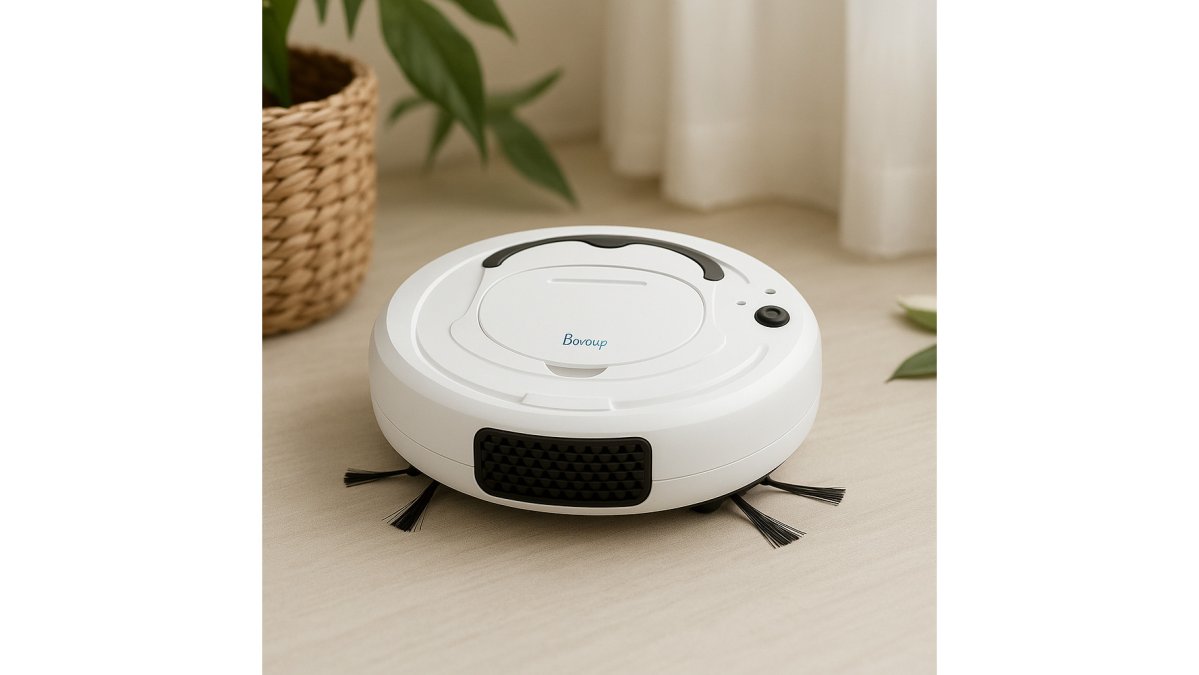
3-in-1 Robot Vacuum ($49.99)
The 3-in-1 Robot Vacuum runs up to 100 minutes on a single charge, delivers 1500Pa of suction with Boost IQ technology, and returns to its charging base automatically. At 2.85 inches tall, it clears under most furniture without getting stuck.
The auto-scheduling feature handles floor cleaning without daily input. The triple-layer filter captures fine dust, which matters for households with pets or allergy sufferers. Drop-sensing technology prevents tumbles down stairs. It performs best in open floor plans; rooms with many chair legs need more frequent intervention.
Best for: Busy professionals, parents of young children, and anyone who wants clean floors without adding cleaning to their task list.
Aromatherapy Diffuser & Air Humidifier ($25.99)
The Aromatherapy Diffuser & Air Humidifier addresses dry air, static buildup, and ambient scent in one compact device. It holds 130ml of water, supports essential oil compatibility, and includes optional ambient lighting. The device runs silently, which matters more than most product descriptions acknowledge.
Best for: Bedrooms, home offices, and small apartments where air dryness is a recurring issue in winter months.
Silent LED Mosquito Killer ($20.99)
The Silent LED Mosquito Killer uses UV light and photocatalyst technology to attract and trap mosquitoes, operating at under 35 dB. No chemicals, no sprays, no odor. It's USB rechargeable, energy-efficient at 5W, and safe for use around infants and pets.
Smart Home Automation Ideas for Daily Routines
The most effective automation is the kind you set once and forget. Two areas where this pays off immediately: morning and evening scenes, and climate control on a schedule.
Morning and Evening Scenes
A "scene" is a pre-configured state that activates multiple devices simultaneously. A morning scene might trigger your humidifier, set your lamp to warm brightness, and start your robot vacuum. An evening scene dims lighting, activates the diffuser with a calming essential oil, and silences the mosquito killer's UV cycle.
Scenes work best when built around analog triggers, not app taps. A lamp that turns on when you lift a magnetic sphere requires zero app interaction. A diffuser set to run on a USB timer costs nothing to automate. Physical routines add reliability; presence detection adds complexity.
Climate Control and Air Quality on a Schedule
Scheduling air quality management is one of the highest-return smart home automation ideas. Running a humidifier during sleeping hours, cycling the mosquito killer at dusk, and using a portable air conditioner during peak afternoon heat all follow predictable patterns that reward scheduling.
According to the EPA's guidance on indoor air quality, indoor air can be two to five times more polluted than outdoor air, with dry air and inadequate ventilation among the primary contributors. Devices that address humidity and air circulation directly respond to this problem without requiring network connectivity.
Smart Gadgets for Lighting, Entertainment, and Kitchen
Lighting, entertainment, and kitchen gadgets represent the second tier of smart home investment: devices that improve quality of life rather than reduce maintenance burden.
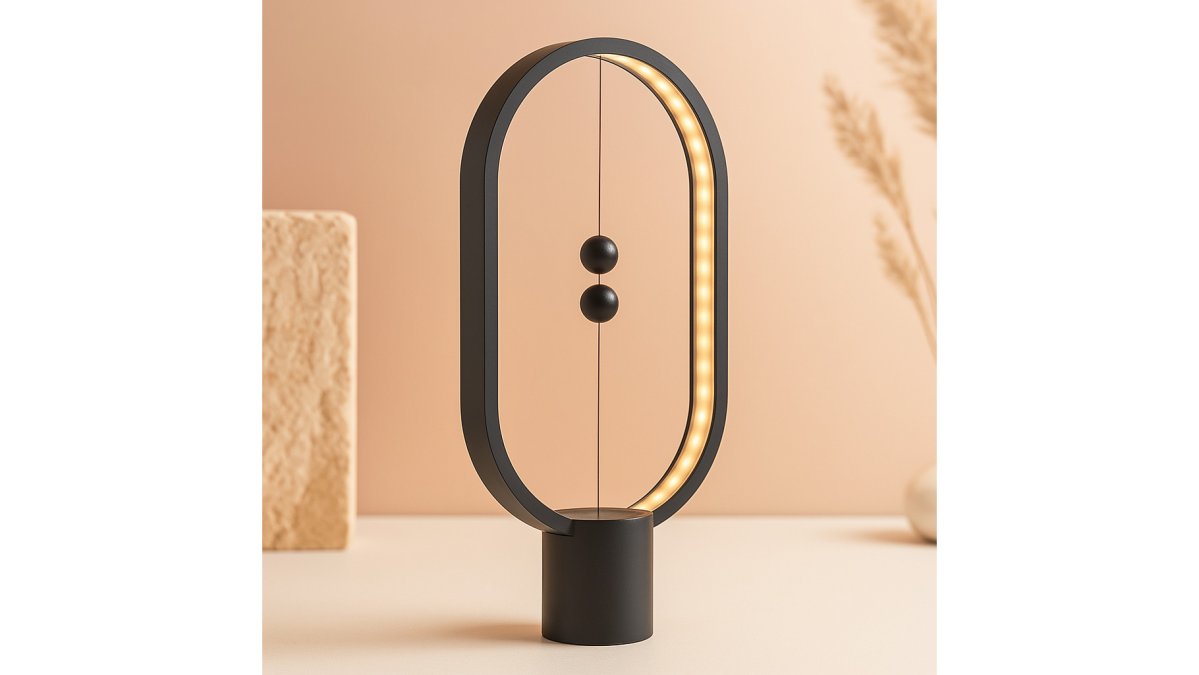
LED Magnetic Table Lamp ($49.99)
The LED Magnetic Table Lamp uses a magnetic sphere switch: balance two magnetic balls to activate the lamp. It runs 48 LED beads at 3500K warm white, rated for 50,000 hours of use. USB-powered, no hub required, no firmware updates.
Best for: Bedrooms and home offices where ambient lighting matters and a conversation-starting design is welcome.
Mini 1080P LED Projector ($68.99)
The Mini 1080P LED Projector turns any blank wall into a 220-inch display. At 6 oz and 5 x 3.4 x 1.8 inches, it connects via HDMI, USB, AV, 3.5mm jack, or TF card. Rated for 30,000 hours of use with 600 lumens brightness. It performs best in dark environments; for daytime use or brightly lit rooms, image quality drops noticeably.
Digital LCD Measuring Cup Scale ($20.99)
The Digital LCD Measuring Cup Scale combines a digital scale and measuring cup with real-time temperature reading and auto-conversion between weight and volume for common ingredients. Capacity is 1000g / 600ml. The detachable design matters for storage in small apartments.

How to Set Up a Reliable Smart Home Ecosystem
A reliable smart home ecosystem is one where devices work together without requiring constant management.
Start With a Single Hub or Protocol
The biggest setup mistake is buying devices across incompatible protocols and expecting them to work together. Zigbee, Z-Wave, Wi-Fi, and Bluetooth all operate differently. Starting with one protocol or one hub that bridges multiple protocols prevents integration headaches.
For beginners, Wi-Fi-based devices with no hub requirement offer the lowest barrier to entry. The products in this guide fall into this category: USB-powered, standalone operation, no bridge required.
Interoperability and the Matter Standard
The Matter standard is an open-source connectivity protocol developed by the Connectivity Standards Alliance to solve smart home interoperability. Matter-certified devices can communicate across ecosystems, Apple Home, Google Home, Amazon Alexa, without manufacturer-specific bridges.
According to the Connectivity Standards Alliance's Matter specification, Matter uses IP-based communication over Wi-Fi and Thread, enabling local control without cloud dependency. For anyone building a voice-activated smart home ecosystem in 2026, prioritizing Matter-compatible devices is the single best architectural decision you can make.
Troubleshooting Common Setup Issues
Most smart home setup problems fall into three categories:
- Connectivity failures: Device won't connect to Wi-Fi. Almost always caused by a 5GHz network. Most smart home devices operate on 2.4GHz only. Check your router settings.
- Firmware issues: Device behaves erratically after an update. Hard reset the device (usually a 10-second button hold) and re-pair from scratch.
- Hub protocol mismatch: Device pairs but won't respond to commands. Confirm the device's protocol matches your hub's supported protocols.
Smart Home Gadgets Comparison: Quick Reference Table
| Product | Price | Best For | Connectivity | Key Feature |
|---|---|---|---|---|
| 3-in-1 Robot Vacuum | $49.99 | Automated floor cleaning | Standalone | 100-min runtime, auto-recharge |
| Aromatherapy Diffuser & Humidifier | $25.99 | Air quality, relaxation | Standalone | Essential oil compatible, ambient light |
| Silent LED Mosquito Killer | $20.99 | Chemical-free pest control | USB | UV + photocatalyst, under 35 dB |
| LED Magnetic Table Lamp | $49.99 | Ambient lighting, decor | USB | 50,000-hour LED, magnetic switch |
| Mini 1080P LED Projector | $68.99 | Home entertainment | Multi-port | 220-inch projection, 30,000-hr rated |
| Digital LCD Measuring Cup Scale | $20.99 | Precision cooking | Standalone | Weight + volume + temperature |
Which Smart Home Gadgets Should You Buy First?
The right purchase sequence depends on your primary friction point.
If your biggest problem is cleaning time: Start with the 3-in-1 Robot Vacuum. It delivers the highest daily time savings and requires no ongoing management once scheduled.
If your home feels uncomfortable or stale: The Aromatherapy Diffuser & Air Humidifier addresses air quality, dryness, and ambient scent simultaneously.
If you want better lighting without rewiring: The LED Magnetic Table Lamp is a no-installation upgrade that works immediately.
If you're building from scratch: Follow the sequence above in order. Robot vacuum first (daily impact), humidifier second (comfort), lamp third (ambiance). Add the projector when entertainment becomes a priority.
Standalone USB-powered devices with no cloud dependency have no server-side failure risk. A lamp rated for 50,000 hours and a vacuum with auto-recharge logic will outlast any app-dependent device by a significant margin. According to Consumer Reports' smart home reliability findings, devices that operate locally and independently consistently outperform cloud-dependent alternatives in long-term reliability assessments.
The Oatmehome product range is built around this principle: practical tools that simplify daily routines without adding technical overhead. Every product in this guide operates independently, requires minimal setup, and solves a specific, recurring household problem.
Frequently Asked Questions
Which smart home gadgets are actually worth the money?
Gadgets that earn their place are the ones you use every day without thinking about them. A robot vacuum that runs on a schedule, an air humidifier that improves sleep quality, and a smart LED lamp with long-lasting bulbs all deliver consistent value. The 3-in-1 Robot Vacuum at $49.99 and the Aromatherapy Diffuser at $25.99 are strong starting points because they solve real, recurring problems rather than adding complexity to your routine.
What are the must-have smart home devices for a modern household in 2026?
For 2026, the most practical smart home gadgets cover floor care, air quality, and ambient lighting. A robot vacuum handles daily cleaning automatically, a humidifier with aromatherapy support improves air comfort year-round, and a lamp sets the right ambiance without manual effort. Devices that support local control and standard protocols like Matter also future-proof your setup against cloud service changes or compatibility issues down the line.
How do I choose reliable smart home devices that won't become obsolete?
Focus on devices built around open protocols such as the Matter standard, which allows broad interoperability across ecosystems. Avoid gadgets that rely entirely on a single manufacturer's cloud service, since those can stop working if the service shuts down. Prioritize local control options, regular firmware update support, and hardware that serves a clear daily function. Simpler devices with fewer software dependencies tend to have better long-term hardware reliability.
Are there smart home gadgets that improve home security and efficiency?
Yes. Motion sensors, presence detection devices, and automated lighting routines can contribute to home security. Geofencing-enabled routines can turn off energy-consuming devices when you leave and activate them on your return. For air quality and environmental monitoring, a humidifier with sensor feedback helps maintain healthy indoor conditions. Pairing a robot vacuum on a scheduled routine with smart lighting scenes can also contribute to energy efficiency.
What smart home gadgets work best for small apartments?
Compact, multi-function devices are the best fit for small spaces. The 3-in-1 Robot Vacuum at just 7.2 cm tall slides under low furniture and requires no dedicated storage beyond its charging base. The USB Aromatherapy Humidifier at $20.99 takes up minimal counter space while improving air quality. A mini portable air conditioner and a pocket-sized LED projector also deliver full-size functionality without occupying significant floor or shelf space.
Managing a home efficiently comes down to choosing tools that work without demanding your attention. The smart home gadgets covered here solve real problems, dirty floors, dry air, poor lighting, pests, and imprecise cooking, without requiring a network engineer to configure them. Shop the full range at Oatmehome and get started with products designed to make your daily routine genuinely easier.
This article was written using GrandRanker