

Space Saving Home Organization Tools Worth Buying in 2026
Table of Contents
- Quick Comparison: Top Space Saving Home Organization Tools
- How We Chose These Space Saving Home Organization Tools
- Kitchen Sink Drain Basket Organizer: Corner Storage That Works
- Retractable Stainless Steel Sink Rack: Instant Counter Space
- Foldable Kitchen Chopping Board: Prep, Rinse, and Store in One Step
- Wall-Mount Waterproof Toilet Paper Holder: Best Bathroom Organization Hacks 2026
- Vertical Storage Ideas for Home: From the Kitchen to the Bathroom
- Small Space Storage Solutions for Food and Gear
- Frequently Asked Questions
Last Updated: September 7, 2026
Small kitchens and cramped bathrooms share one problem: horizontal space runs out fast. The practical answer is buy space saving home organization tools that work vertically, collapse when idle, or turn dead zones like the sink corner into active storage. This guide from Oatmehome covers the specific products that deliver real results in compact homes, plus the measurements and materials that separate a lasting purchase from a regretful one.
Quick Comparison: Top Space Saving Home Organization Tools
The strongest space saving home organization strategy combines a few versatile pieces rather than dozens of single-purpose gadgets. Each tool below targets a specific dead zone.
| Tool | Price | Primary Function | Best For |
|---|---|---|---|
| Kitchen Sink Drain Basket Organizer | $10.99 | Corner sink storage | Sponges, soap, produce |
| Retractable Stainless Steel Sink Rack | $24.99 | Over-sink drying and rinsing | Draining produce and dishes |
| Foldable Kitchen Chopping Board | $22.99 | Prep, rinse, and store | Compact kitchens and travel |
| Wall-Mount Waterproof Toilet Paper Holder | $42.99 | Bathroom wall storage | Moisture-prone bathrooms |
How We Chose These Space Saving Home Organization Tools
Most guides list products based on looks alone. We selected these tools by asking whether they solve a spatial problem that persists after the novelty fades. Each pick must reclaim counter space, use vertical wall area, or collapse to near-zero footprint when not in use.

What to Measure Before You Buy
Cabinet depth and sink dimensions determine which organizers actually fit. Measure the interior width of your sink basin and the clearance between the faucet base and the back wall before ordering a corner basket or roll-up rack. For wall-mounted bathroom storage, confirm the surface can support the mounting method and that the holder does not block a cabinet door swing.
A practical measurement checklist for tight spaces:
- Corner sink clearance: Measure the diagonal distance from the corner to the edge of the faucet base. A standard 8-inch clearance is often the minimum for a basket not to interfere with the faucet handle (thisoldhouse.com).
- Under-sink depth: Measure the depth of the cabinet from the front frame to the back wall, and subtract 2 inches for the plumbing trap. Many organizers are 14-16 inches deep, which will not fit in a standard 12-inch-deep vanity.
- Over-sink rack width: Measure the interior width of your sink basin at its widest point. A roll-up rack needs to overhang the rim by at least 1 inch on each side to sit securely. For a standard 33-inch sink, a 28-inch rack is often the right fit.
- Vertical clearance for stackable bins: Measure the shelf height above the bin. A stack of two 8-inch-tall bins needs at least 17 inches of clearance to allow for easy removal of the top bin.
- Door swing arc: For any wall-mounted holder, trace the arc of the cabinet or bathroom door swing with your finger. The holder must sit entirely outside this arc to prevent collisions.
Materials That Last in Real Homes
Rust resistance matters most in wet zones. Stainless steel and food-grade, BPA-free silicone handle constant moisture without degrading, while ABS plastic suits dry areas like closets and shelves. Avoid untreated wire racks in bathrooms, where humidity accelerates corrosion. The products featured here use rust-resistant stainless steel, food-grade silicone, and waterproof plastics specifically to survive daily exposure.

Beyond rust: a material durability guide for small-space tools
Material choice affects longevity, food safety, and environmental footprint. Here is what to prioritize:
- Food-grade silicone (BPA-free): This is the most forgiving material for wet zones. It does not corrode, it grips surfaces without scratching, and it can handle temperature swings from freezer to boiling water. Look for silicone that is explicitly labeled "platinum-cured" rather than "peroxide-cured", platinum-cured silicone has fewer leachable compounds and a longer lifespan.
- 18/10 or 18/8 stainless steel: These numbers refer to the chromium and nickel content. 18/10 (18% chromium, 10% nickel) is more corrosion-resistant than 18/0 (which contains no nickel and is more prone to rust in humid environments) (bssa.org.uk). For bathroom fixtures, always choose 18/10. For kitchen tools that touch food, 18/8 is a safe, common standard.
- Recycled ABS plastic: For dry-area organizers like drawer dividers or closet bins, ABS plastic is lightweight and durable. However, not all ABS is created equal. Look for products made from post-consumer recycled (PCR) ABS, which reduces the demand for virgin petroleum-based plastic. A growing number of manufacturers now label their PCR content percentage, 30% to 50% is common in quality bins.
- Avoid mixed-metal plating: Zinc or chrome plating over a steel core can chip in high humidity, exposing the base metal to rust. A solid stainless steel piece costs more upfront but avoids this failure point.
A note on sustainability: The cheapest plastic organizer often ends up in a landfill within a year. A durable stainless steel or silicone tool, while costing 2-3 times more, can last a decade or more, yielding a lower environmental impact per use.
This measurement-first, material-conscious approach separates a purchase that solves a problem for years from one that creates new clutter. The tools here hold up in the specific conditions of a compact home, high humidity, frequent use, and limited storage space for backups.
Kitchen Sink Drain Basket Organizer: Corner Storage That Works
The sink corner is usually wasted square footage. A triangular organizer converts that gap into usable storage for sponges, scrub brushes, or fresh produce needing air circulation. The Oatmehome Kitchen Sink Drain Basket Organizer uses suction cups for damage-free mounting, so renters can install it without drilling.
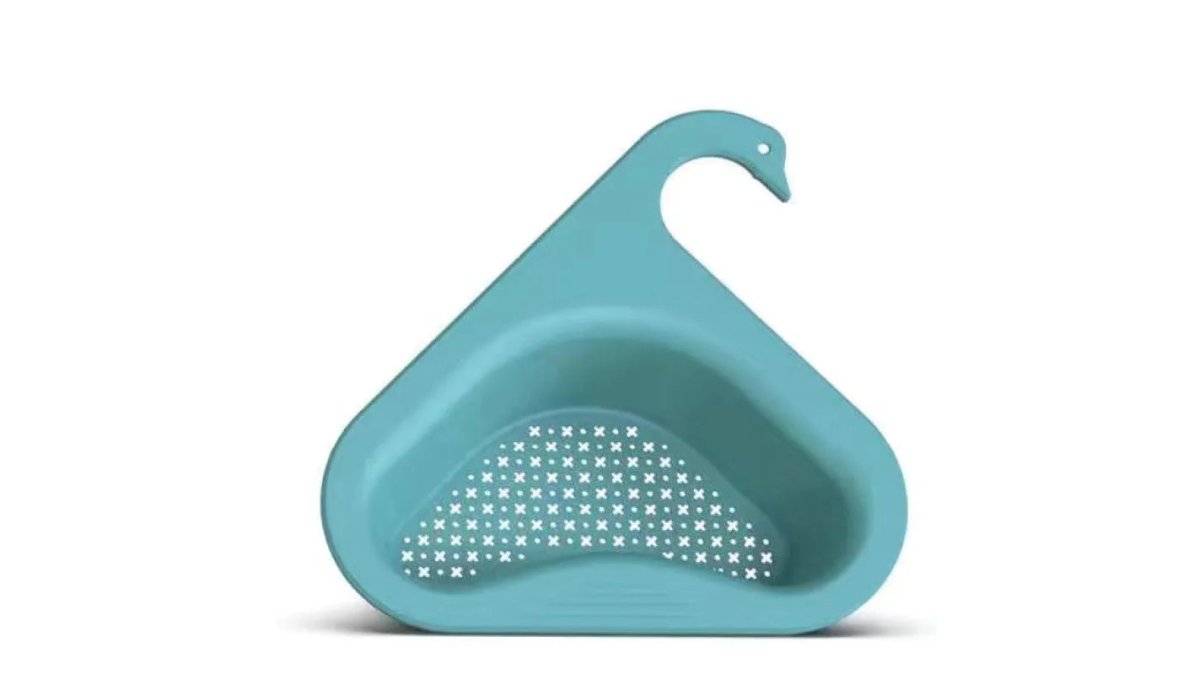
The dense drainage holes prevent water pooling that breeds bacteria, the failure point of cheaper solid-bottom holders. At $10.99, it is the lowest-cost fix in this lineup, and its versatility as a fruit basket or peel bin adds value beyond sponge storage.
Retractable Stainless Steel Sink Rack: Instant Counter Space
Counter space disappears the moment you wash produce or air-dry dishes. The Retractable Stainless Steel Sink Rack spans the sink basin to create an instant drying surface, letting water drain directly into the sink. Its roll-up design tucks into a drawer or cupboard between uses.
The construction pairs rust-resistant stainless steel with food-grade, BPA-free silicone edges that grip the sink rim without scratching. It doubles as a defrosting rack for meat and fish. At $24.99, it replaces both a bulky drying rack and a dedicated colander for many households.
Foldable Kitchen Chopping Board: Prep, Rinse, and Store in One Step
Chopping boards occupy prime counter real estate even when idle. The Foldable Kitchen Chopping Board collapses the entire prep workflow: cut on the flat surface, fold it into a basket shape, rinse under the tap using the built-in drain plug, then store it flat. This removes the need for separate colanders and mixing bowls in tight kitchens.

The food-grade PP material resists stains and odors, which matters when the same board handles onions, berries, and raw produce. Anti-slip legs keep it stable during chopping, and the carry handle makes it practical for picnics or camping. For $22.99, it replaces three single-purpose items, which is the core logic of effective space saving home organization.
Wall-Mount Waterproof Toilet Paper Holder: Best Bathroom Organization Hacks 2026
Bathrooms present a moisture problem that ruins paper goods and creates clutter. The Wall-Mount Waterproof Toilet Paper Holder removes the roll from countertops and protects it from splashes inside a sealed compartment. The double storage design adds a drawer for plastic bags, sanitary products, or cleaning wipes.
The built-in phone and tablet holder addresses how people actually use bathrooms today, and the splash-proof housing keeps the roll dry even in tight showers. At $42.99, it is the premium pick, but it replaces a tissue box, a wall shelf, and a phone stand in one fixture. For anyone tracking best bathroom organization hacks 2026, this holder represents the shift toward multifunctional wall-mounted storage.
Vertical Storage Ideas for Home: From the Kitchen to the Bathroom
Vertical storage ideas for home follow one rule: if it hangs, it does not occupy a surface. Wall-mounted holders, suction-cup baskets, and over-sink racks all exploit vertical planes that most homes leave empty. The same logic extends to closet doors, inside cabinet doors, and under shelves.
Tension rods between cabinet walls create instant shelf dividers for cutting boards and baking sheets. Stackable bins on pantry shelves double usable space by filling the air gap above shorter items. The key is measuring the vertical clearance before buying, since a stack that exceeds shelf height defeats the purpose.
Small Space Storage Solutions for Food and Gear
Food storage and gear organization share a common enemy: air. The Mini Heat Bag Sealer at $14.99 reseals opened snack bags to lock out moisture, while the Mini Automatic Vacuum Sealer Pump at $23.99 removes air entirely for longer-term storage. Both shrink the volume of stored food and prevent waste. These count as small space storage solutions because they reduce the physical footprint of your pantry over time.
Vacuum-sealed bags lie flat and stack efficiently, unlike bulky original packaging. The same principle applies to seasonal clothing and bedding: compression bags cut stored volume dramatically. For households that buy in bulk or meal-prep, a vacuum sealer pays for itself by extending freshness and freeing cabinet space simultaneously.
How Vacuum Sealing Changes Your Storage Geometry
The real space-saving benefit of vacuum sealing is not just the bag's flat profile, it is the ability to reconfigure your storage layout. A standard 11-inch by 16-inch vacuum bag compresses to roughly 1 inch thick when sealed. That means you can fit 10 to 12 sealed bags in the same vertical space that holds 2 or 3 original cereal boxes or 4 bulky snack bags, reclaiming 60-70% of a standard 12-inch-deep pantry shelf's volume.
The mechanism behind the compression: A vacuum sealer removes ambient air, which is mostly nitrogen and oxygen. Oxygen is the primary driver of food spoilage (oxidation) and also provides the space for mold and bacteria to grow. By removing oxygen, you slow spoilage and eliminate the air pockets that make packaging bulky, resulting in a dense, flat package that can be filed vertically in a bin.
Maintenance and Cleaning: Keeping Your Tools Functional
A vacuum sealer is only useful if it is clean and ready to use. Here is a practical maintenance routine:
- After each use: Wipe the sealing strip with a dry cloth to remove any food residue. A dirty sealing strip is the #1 cause of weak seals.
- Weekly: Run a damp cloth with a mild dish soap along the drip tray (if your model has one) and the vacuum channel. Do not submerge the unit in water.
- Monthly: Check the foam gasket around the lid. If it is compressed or cracked, replace it, a faulty gasket prevents a proper vacuum seal.
- For the heat sealer: The heating wire can accumulate melted plastic over time. After the unit cools, gently scrape off any residue with a plastic tool. Never use metal, which can damage the wire.
Cleaning the bags themselves: Most vacuum bags are reusable if they are not used for raw meat or fish. Wash them in warm soapy water, turn them inside out to dry thoroughly, and they are ready for another cycle. This saves money and reduces plastic waste.
Rental-Friendly and Non-Permanent Options
For apartment dwellers, the challenge is often not the food storage itself but the lack of built-in pantry space. Here are rental-friendly strategies that complement a vacuum sealer:
- Over-the-door pantry racks: These hang on the back of a pantry or closet door without drilling. They add 4-5 shelves of storage for sealed bags, canned goods, and spices. A standard over-door rack holds up to 30 pounds when properly installed (homedepot.com).
- Tension rod shelf dividers: Install a tension rod horizontally inside a cabinet to create a second level for lightweight sealed bags. This works without any permanent modification.
- Freestanding utility carts: A narrow 12-inch-wide rolling cart fits between the refrigerator and the wall or in a gap beside a cabinet. Use it to store a vacuum sealer, bags, and bulk items. The wheels make it easy to move for cleaning.
The portable tools in this category earn their place because they serve daily routines, not occasional projects. A bag sealer used twice a week prevents more waste than a large appliance used monthly. When choosing between a single-purpose gadget and a multifunctional tool, the one that replaces multiple items always wins for compact homes.
Frequently Asked Questions
Where can I buy home organization supplies that are durable?
Skip the big-box stores for this purchase. The best space saving home organization tools come from specialty retailers like Oatmehome, which tests for everyday use. Look for rust-proof materials, BPA-free plastics, and stainless steel hardware. Read the fine print on weight capacity and check if the item is waterproof. A $10 tool that lasts three years beats a $5 tool you replace every season.
What are the best space-saving organization tools for small apartments?
For apartments under 800 square feet, focus on tools that collapse or mount. Retractable sink racks roll up for storage, foldable chopping boards tuck into drawers, and wall-mounted holders use vertical space instead of floor space. These small space storage solutions target the kitchen and bathroom, which are the two rooms where clutter builds fastest.
Are there specific organization tools that help maximize vertical space?
Yes. Wall-mounted toilet paper holders with drawers, sink corner baskets, and over-the-sink racks all add storage without touching your counter or floor. These vertical storage ideas for home turn dead wall space into functional zones. Install them at arm's reach so daily items stay visible and accessible, which cuts down on clutter piling up on flat surfaces.
How do I know these products are durable and won't fall apart after a few months?
Check three things before you buy: the material, the weight rating, and the warranty. Stainless steel and ABS plastic hold up to daily moisture, while cheap acrylic cracks. Look for rust-proof claims on anything near water. Oatmehome offers a 10-day money-back guarantee on the Portable Foldable Silicone Electric Kettle.