

At-Home Alternative for Kitchen Essentials: Smart Swaps
Table of Contents
- Why Your Kitchen Needs an Alternative Approach to Essentials
- The At-Home Alternative for Kitchen Essentials: Multipurpose Tools That Earn Their Space
- Quick Comparison: What Each Swap Replaces and What It Costs
- The Best Non-Toxic Kitchen Tools for Everyday Cooking
- Minimalist Kitchen Essentials Checklist: What to Keep and What to Skip
- How to Organize Kitchen Essentials in a Small Space
- Maintenance and Longevity: Making Your Kitchen Tools Last
- Final Verdict: Is an At-Home Alternative Right for You?
- Frequently Asked Questions
Last Updated: September 9, 2026
Why Your Kitchen Needs an Alternative Approach to Essentials
The average kitchen drawer is a graveyard of single-use gadgets bought in a moment of optimism and abandoned after one mediocre attempt. A garlic press that only crushes, a salad spinner that takes up an entire cabinet, a colander that gets used twice a month. Each one promises convenience but delivers clutter, and clutter costs you prep time every single day.
An at-home alternative for kitchen essentials starts with a simple premise: one tool should do the work of three. This guide from Oatmehome breaks down how to curate a kitchen around versatility and sustainability rather than accumulation, especially if you are cooking in a small apartment where counter and cabinet space come at a premium. The goal is a setup that produces restaurant-quality results without requiring a walk-in pantry to store it all.
Most guides tell you to buy more. We are going to argue the opposite. The real shift is toward multipurpose tools, non-toxic materials, and space-saving designs that earn their place on your counter. Below, we will show you exactly how to swap out the clutter for a leaner, more functional collection that actually gets used.
The At-Home Alternative for Kitchen Essentials: Multipurpose Tools That Earn Their Space
Kitchen essentials are the tools you reach for daily: a chef's knife, a cutting board, a colander, a skillet. The problem is that a traditional "essential" list assumes you have unlimited storage. The alternative approach consolidates those functions into fewer, smarter objects.
The strategy is straightforward. Instead of buying a dedicated tool for every task, look for items that combine prep, rinsing, and storage functions. This cuts down on the number of utensils you own, reduces cleanup time, and frees up valuable drawer space. It is a shift from collecting gadgets to curating a system.
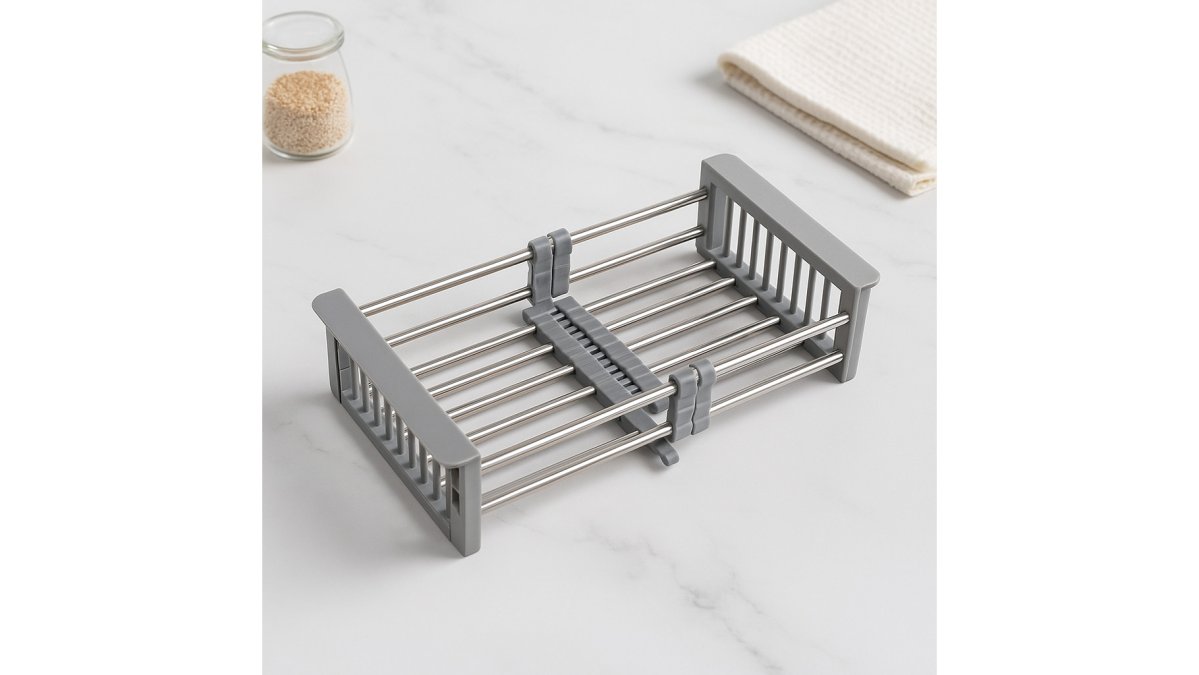
Retractable Sink Rack: Replaces Colanders, Drying Racks, and Defrosting Trays
A dedicated colander and a bulky drying rack take up serious cabinet real estate. The Retractable Stainless Steel Sink Rack at $24.99 replaces both, plus it handles defrosting.

Stretch it over your sink to rinse fruits and vegetables, letting water drain directly down the drain. Use it to air-dry dishes, cookware, and cutlery without sacrificing counter space. Need to defrost meat or fish? It works as a raised platform under running water. When you are done, it rolls up into a compact cylinder that tucks into a drawer.
The construction matters here. It is made from rust-resistant stainless steel and ABS materials with food-grade, BPA-free silicone edges that keep it non-slip.
Foldable Chopping Board: Replaces Cutting Boards, Colanders, and Storage Bins
This is the workhorse of the alternative setup. The Foldable Kitchen Chopping Board at $22.99 transforms from a flat cutting surface into a basket, a dish tub, a drain basket, or a storage bin.


Chop your vegetables on the sturdy, anti-slip surface, then fold the board into its basket form to carry the ingredients to the sink. A built-in twistable drain plug lets you rinse and drain without transferring to another container. When prep is done, fold it flat and slide it into a cupboard.
It is crafted from high-quality, BPA-free PP material. The carry handle and foldable design make it equally useful for camping trips or picnics, extending its value beyond the kitchen.
9-in-1 Drain Basket: Replaces Slicers, Peelers, and Salad Spinners
For anyone who preps a lot of produce, the 9-in-1 Drain Basket at $29.99 is the closest thing to a full prep station in one device. It combines slicing, peeling, chopping, and washing functions with an automatic rotating basket.
You cut vegetables directly into the basket, then rinse them through the built-in drainage grid without moving them to a separate colander. The multi-style knife heads handle different cuts, from potato slices to onion dices. Anti-skid feet keep the basket stable on the counter.
This single tool eliminates the need for a dedicated vegetable slicer, a peeler, and a salad spinner. The removable cutter cover makes cleaning safe and straightforward.
Quick Comparison: What Each Swap Replaces and What It Costs
To see the value proposition clearly, it helps to lay out exactly what you are consolidating. Here is a breakdown of the at-home alternative tools and the traditional items they replace.
| Tool | Price | Replaces | Space Saved |
|---|---|---|---|
| Retractable Sink Rack | $24.99 | Colander, drying rack, defrosting tray | Full cabinet shelf |
| Foldable Chopping Board | $22.99 | Cutting board, colander, storage bin | Drawer or cupboard slot |
| 9-in-1 Drain Basket | $29.99 | Slicer, peeler, salad spinner, colander | Entire gadget drawer |
| Sink Drain Basket Organizer | $10.99 | Sponge holder, fruit basket, peel bin | Sink corner clutter |
| Digital Measuring Cup Scale | $20.99 | Measuring cups, kitchen scale, thermometer | Two drawers worth |
The cost-benefit analysis is compelling. Buying a colander, drying rack, and defrosting tray separately will likely cost more than the single sink rack and occupy three times the storage space. The same logic applies across the board. You are not just saving money; you are reclaiming square footage in a small kitchen where every inch counts.
The Best Non-Toxic Kitchen Tools for Everyday Cooking
Material safety is a growing concern, and for good reason. Many plastic kitchen tools contain BPA or other chemicals that can leach into food, especially when exposed to heat or acidic ingredients (the FDA). The best non-toxic kitchen tools prioritize food-grade, BPA-free materials.
Every tool recommended here is built with this in mind. The sink rack uses food-grade, BPA-free silicone and stainless steel. The chopping board is made from BPA-free PP and TPR.
This emphasis on non-toxic materials aligns with a zero-waste and sustainable kitchen philosophy. Instead of buying disposable tools that crack and end up in a landfill after a few months, you invest in durable, reusable items. That is better for your health and for the environment.
Minimalist Kitchen Essentials Checklist: What to Keep and What to Skip
Curating a minimalist kitchen requires a clear head about what you actually use. A common mistake is keeping tools "just in case" for a recipe you made once in 2022. Here is a practical checklist to guide your decluttering.
Keep these multipurpose staples:
- A high-quality chef's knife (8-inch is the sweet spot for most home cooks)
- A stainless steel skillet and a cast-iron pan for even heat distribution
- One foldable cutting board that doubles as a rinsing basket
- A retractable sink rack for draining and drying
- A silicone spatula that is heat-resistant and does not scratch cookware
- A digital measuring cup scale for precise baking
Skip these single-use gadgets:
- Dedicated egg slicers, avocado tools, and herb scissors (a chef's knife does it all)
- Bulky electric appliances you use less than once a month
- Plastic storage containers with missing lids
- Specialty pans for one specific dish (like a cake pop maker)
The test is simple. If you have not used a tool in the last three months and it does not serve a multipurpose function, it is a candidate for donation. This decluttering process is the first step toward a kitchen that feels calm and functions efficiently.
How to Organize Kitchen Essentials in a Small Space
Once you have curated your tools, the challenge is organization. Small kitchens demand vertical thinking and strategic use of every surface. The goal is to keep frequently used items accessible while storing the rest out of sight.
Start by designating zones. Keep your prep tools, like the chef's knife and foldable chopping board, near your primary counter workspace. Store the retractable sink rack over the sink or rolled up in a nearby drawer, since that is where you will use it. Group baking items, like the digital measuring cup scale, together in one cabinet.
The Kitchen Sink Drain Basket Organizer at $10.99 is a perfect example of small-space thinking. Its compact triangular design fits snugly into a sink corner, holding sponges, soap, or fresh produce without crowding the washing area. Strong suction cups mount it securely without drilling or adhesives, making it ideal for rental apartments.
Maintenance and Longevity: Making Your Kitchen Tools Last
Durability is not just about buying quality; it is about maintaining it correctly. The reason many kitchen tools "fall apart after a few months" is often improper care rather than poor manufacturing. Understanding how to clean and store your tools extends their lifespan significantly.
For stainless steel and silicone tools like the retractable sink rack, the maintenance is simple. Hand-washing with warm soapy water and air-drying will preserve the finish longest. Avoid using abrasive scrubbers on the silicone edges, as this can create micro-tears that harbor bacteria (peer-reviewed research).
The foldable chopping board requires similar care. Its BPA-free PP material, but you should still rinse it promptly after cutting strongly colored foods like beets or turmeric. The twistable drain plug should be rinsed thoroughly to prevent food particles from getting stuck in the mechanism.
For the digital measuring cup scale, note that it is hand-wash only. Rinse the cup with warm soapy water and let it air dry. The electronic components in the handle should never be submerged. Proper care here ensures the LCD display and auto-conversion features keep working accurately.
Final Verdict: Is an At-Home Alternative Right for You?
The at-home alternative for kitchen essentials is not about deprivation. It is about making a deliberate choice to own fewer, better things. If you are tired of a cluttered kitchen where you cannot find the right tool, or if you live in a small space where storage is a constant battle, this approach offers a genuine solution.
The multipurpose tools we have covered consolidate the functions of a full gadget drawer into three or four core items. They save space, reduce prep time, and simplify cleanup. The non-toxic, food-grade materials offer peace of mind.
At Oatmehome, we focus on practical household solutions that make daily routines easier. Our curated range of kitchen essentials is designed around functionality and reliable design, so you can maintain a fresh, organized, and comfortable cooking space. If you are ready to declutter and cook more efficiently, explore our collection of space-saving tools and see the difference a curated kitchen makes.
Frequently Asked Questions
What are the best kitchen essentials for a minimalist kitchen?
A minimalist kitchen relies on multipurpose tools. Focus on a chef's knife, a cutting board, a stainless steel skillet, a silicone spatula, and a cast-iron pan. Swap single-use gadgets for items like a retractable sink rack that drains produce and dishes. This keeps your counter clear and reduces clutter while covering most daily cooking tasks.
What is the best at-home alternative for kitchen essentials like colanders and drying racks?
A retractable stainless steel sink rack replaces a colander, drying rack, and defrosting tray in one tool. It stretches over your sink to drain fruits, veggies, and dishes, then rolls up for compact storage. This saves counter space and removes the need for three separate bulky items.
How do I choose non-toxic kitchen tools over mass-market options?
Look for food-grade, BPA-free materials like stainless steel, silicone, and PP plastic. Avoid tools with unknown coatings or strong chemical smells. Check product labels for material certifications before buying.
How do I organize kitchen essentials in a small apartment?
Use vertical storage and foldable tools. Mount a sink organizer in the corner for sponges and produce. Choose a foldable chopping board that doubles as a basket and stores flat in a drawer. Keep only tools you use weekly. A retractable rack rolls up and tucks away, freeing counter space in compact kitchens.
Ready to simplify your kitchen? Shop Oatmehome's multipurpose kitchen tools and start cooking with less clutter and more confidence.