

How to Keep Home Organized Daily: 7 Simple Habits
Table of Contents
- Why Daily Decluttering Fails (and the Psychology Behind Clutter)
- The Evening Reset Routine: 15 Minutes to a Clutter-Free Home
- Habit Stacking: Attach Organization to Daily Chores You Already Do
- Corral Everyday Items: Designated Spots for High-Traffic Areas
- The Best Home Organization Tools for 2026 (Tested and Practical)
- Space-Saving Bathroom Organization Hacks 2026
- Digital Organization and Going Paperless: The Invisible Clutter
- Family Delegation and Neurodivergent-Friendly Systems
- Frequently Asked Questions
Last Updated: September 15, 2026
Why Daily Decluttering Fails (and the Psychology Behind Clutter)
Most people who try to keep home organized daily fail because they treat organization as a project instead of a habit. A weekend purge feels productive, but by Wednesday the countertops are buried again. Clutter accumulates through dozens of micro-decisions every day, and a one-time cleanup doesn't address the decision-making that created it.
The psychology matters more than the storage bins. Research points to the same pattern: visual noise triggers stress, and stress makes it harder to make the small sorting decisions that prevent future mess (pubmed.ncbi.nlm.nih.gov). Clutter creates stress, stress creates more clutter.
The Real Root Cause of Surface Clutter
Surface clutter isn't a storage problem. It's a landing problem.
Items land on counters, entryway tables, and vanities because they have no designated spot within arm's reach of where they're used. A jacket dropped on a chair is the path of least resistance when the closet is three rooms away. The fix is proximity, not discipline.
The Evening Reset Routine: 15 Minutes to a Clutter-Free Home
The evening reset is the highest-use habit for keeping a home organized without a daily marathon. Spend 15 minutes before bed returning items to their homes, and you wake up to a space that already works. You're resetting a space you just used, so you already know what belongs where, morning-you inherits a clean slate instead of a to-do list.
Here's how the 15 minute daily cleaning routine breaks down:
- Minutes 1-3: Clear all flat surfaces in the main living area. Counters, coffee table, entryway console. Use a single basket to collect stray items rather than walking each one to its home individually.
- Minutes 4-6: Return stray items to their designated spots. Nothing gets "dealt with later." If an item has no home, it goes in a "homeless bin" you address once a week.
- Minutes 7-9: Wipe down kitchen counters and the stovetop. A spray bottle of diluted dish soap and water lives under the sink so you never have to hunt for supplies.
- Minutes 10-12: Reset the bathroom vanity and hang towels. Squeegee the shower walls if you have glass doors; it takes 20 seconds and prevents mineral buildup.
- Minutes 13-15: Do a quick floor sweep of the high-traffic areas. A cordless stick vacuum stored in a closet near the kitchen cuts this to under two minutes (8 Best Stick Vacuums of 2026, Lab-Tested and Reviewed).
How to Build a 15 Minute Daily Cleaning Routine That Sticks
Start with three rooms, not the whole house. Most people quit because they design a routine for an idealized home, not the one they live in. Pick the kitchen, living room, and bathroom; once those reset reliably for two weeks, add a fourth space.

The most common mistake is treating the reset as a deep clean. It's a visual reset. Grout scrubbing and baseboard wiping belong on a weekly or monthly schedule, not in your 15 minutes.
A second failure is doing the reset in the wrong order. Clear surfaces before collecting stray items and you'll move the same pile three times. Work top-down: clear surfaces first, then floors, then wipe, the sequence professional cleaners use.
Room-by-Room Reset Priorities
Not every room needs the same 15-minute treatment. Here is where the minutes actually matter:
- Kitchen: Dishes in the dishwasher, counters cleared, sink empty. The sink is the anchor; if it's clear, the room reads as clean even if the floor needs sweeping.
- Living room: Throw blankets folded, remotes in a tray, pillows fluffed. This is a visual room, so surface order matters more than deep cleanliness.
- Bathroom: Vanity cleared, towels hung, toilet lid down. A squeegee kept in the shower prevents the one chore nobody wants to do (extension.psu.edu).
- Entryway: Shoes in a tray or rack, mail in a single bin, keys on a hook. This room sets the tone for the whole house.
- Bedroom: Bed made, clothes off the floor, nightstand cleared. Making the bed takes 30 seconds and changes how the entire room reads.
What to Do When You Miss a Night
The reset is a habit, not a contract. Missing one night is fine; missing three in a row means your system is too heavy, not that you lack discipline. Shrink the reset rather than abandon it, a five-minute version that clears the kitchen sink and fluffs the pillows beats a skipped night. Consistency beats intensity.
Habit Stacking: Attach Organization to Daily Chores You Already Do
Habit stacking borrows momentum from routines you already perform without thinking. You don't need to remember to tidy; attach tidying to something automatic.
Practical stacks that hold up over time:
- After starting the coffee maker, wipe the counter and put away the dish rack.
- After brushing your teeth, clear the bathroom vanity and hang the towel.
- After letting the dog out, do a 60-second sweep of the entryway.
- After dinner dishes are done, run the evening reset on the kitchen only.
The key is specificity. "Tidy up more" fails. "After I start coffee, I clear the counter" succeeds because the trigger is fixed and the action is small.
Corral Everyday Items: Designated Spots for High-Traffic Areas
Every item that lives on a surface needs a designated spot within reach of where it's used, the principle behind every organization system that survives real life.
For the kitchen, a Kitchen Sink Drain Basket Organizer attaches to the sink with suction cups and holds sponges, soap, and scrubbers off the counter entirely. It's the kind of small fix that removes an entire category of surface clutter.

For dishes and produce, a Retractable Stainless Steel Sink Rack rolls out over the sink when you need it and rolls up for storage when you don't. No permanent countertop real estate required.
| High-Traffic Area | Common Clutter | Designated Spot Solution |
|---|---|---|
| Kitchen sink | Sponges, soap, scrubbers | Sink-mounted drain basket |
| Kitchen counter | Drying dishes, produce | Retractable over-sink rack |
| Entryway | Keys, mail, bags | Wall hook + shallow tray |
| Bathroom vanity | Toiletries, hair tools | Drawer divider + counter caddy |
| Living room | Remotes, chargers, magazines | Lidded basket + cable tray |
The Best Home Organization Tools for 2026 (Tested and Practical)
The best home organization tools for 2026 reduce friction, not features. A tool that takes longer to use than the mess it solves ends up in a drawer.
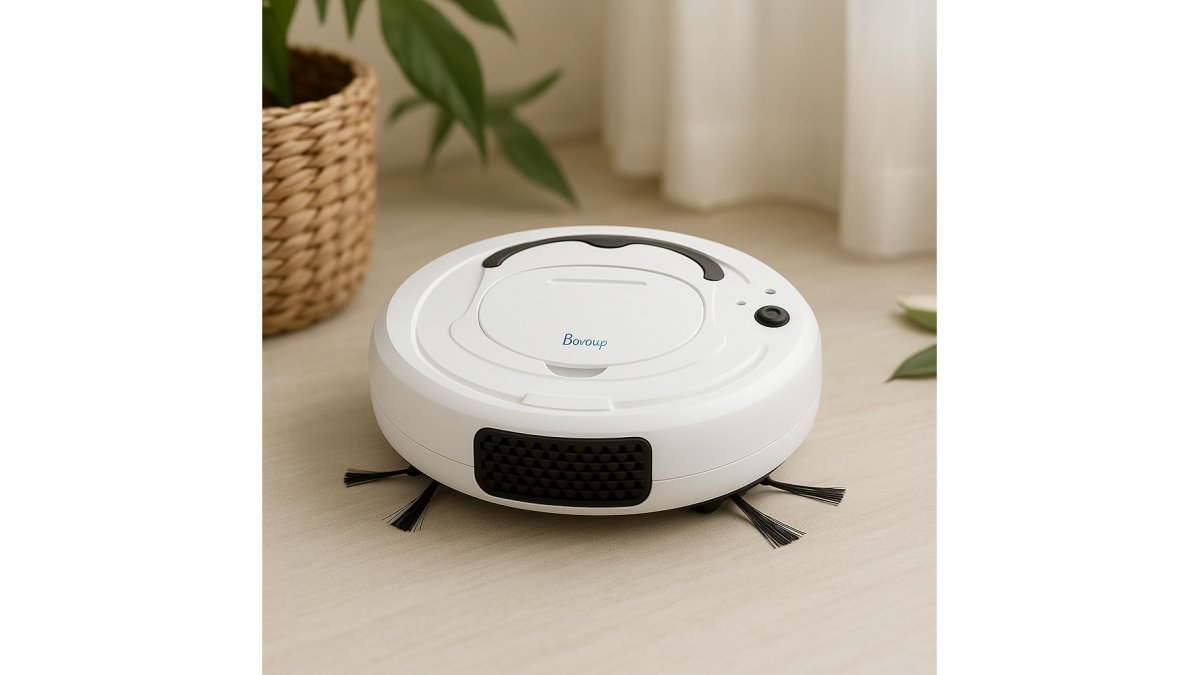
The 3-in-1 Robot Vacuum earns its place. It runs up to 100 minutes on a charge with 1500Pa suction and Boost IQ technology, and its slim profile gets under low furniture where crumbs and dust collect unnoticed. For busy professionals without 20 minutes a day for floor care, it removes an entire chore.
The Hands-Free Flat Mop & Bucket Set eliminates the worst part of mopping: wringing a dirty mop by hand. The built-in wringing system keeps hands dry, and the 360° swivel head reaches under furniture and around fixtures without repositioning.

Space-Saving Bathroom Organization Hacks 2026
Small bathrooms fail because everything competes for the same horizontal surface. Space saving bathroom organization hacks 2026 work by moving storage vertical and eliminating duplicates.
Empty the vanity completely and sort into four piles: daily use, weekly use, backup stock, and never used.
Digital Organization and Going Paperless: The Invisible Clutter
Family Delegation and Neurodivergent-Friendly Systems
Age-Appropriate Daily Contributions
Neurodivergent-Friendly Adjustments
Low-friction adjustments that help:
When to Loosen the System
Frequently Asked Questions
What are 6 things I can do every day to keep my house clean?
Make the bed, clear countertops, put shoes and bags in designated spots, wipe the kitchen sink, sort mail immediately, and run one load of laundry. Each task takes under five minutes. Done daily, these six habits stop surface clutter from piling up and cut the time you spend on weekend cleaning. The goal is consistency, not perfection.
What is the root cause of clutter in the home?
Clutter usually comes from unmade decisions, not laziness. Every item without a designated spot forces a choice later, and those choices stack up until surfaces are covered. Research on household habits points to three drivers: too many items for the space, no clear home for everyday objects, and routines that never include putting things back. Fixing storage and routines addresses the cause.
How do I maintain organization when I am busy?
Shrink the routine until it fits your worst day. A 15 minute daily cleaning routine, done at the same time each evening, keeps a home organized without a weekend overhaul. Stack it onto something you already do, like after dinner or before your shower. On chaotic days, do only the two-minute version: clear one surface and make the bed.
What is the best way to start organizing a chaotic home?
Start with one high-traffic zone, not the whole house. Pick the kitchen counter or entryway, set a 15-minute timer, and sort items into keep, donate, and relocate piles. Add a designated spot for whatever stays. Once that zone holds for a week, move to the next. Small wins build the habit before you tackle closets or paperwork.