

Mytoque vs Hawkins New York: Stoneware Dinnerware Comparison
Table of Contents
- Mytoque vs Hawkins New York Comparison: What Sets These Stoneware Brands Apart
- Quick Comparison Table: Stoneware Dinnerware Side by Side
- Best Stoneware Dinnerware Sets From Each Brand
- Durability and Scratch Resistance: Long-Term Wear and Tear
- How to Choose Dinnerware for Your Home: Material, Finish, and Daily Use
- Microwave, Dishwasher, and Heat Retention Performance
- Price Per Piece and Value: Which Brand Delivers More for Your Table?
- Environmental Impact and Ethical Sourcing in Stoneware Production
- Frequently Asked Questions
Last Updated: September 16, 2026
Mytoque vs Hawkins New York Comparison: What Sets These Stoneware Brands Apart
Choosing between Mytoque and Hawkins New York comes down to a single question: do you want expressive, handcrafted character or restrained, design-forward consistency? Both brands sell stoneware dinnerware, but they serve different tables. This comparison from Oatmehome breaks down glazes, durability, heat performance, and price per piece so you can match the right set to your home.
Stoneware is a durable, non-porous type of ceramic fired at high temperatures, which gives it better chip resistance than standard earthenware. That durability matters when dinnerware moves from cupboard to table to dishwasher every day. Most buyers shopping this category are weighing the same trade-offs: matte finish versus glossy glaze, organic shapes versus clean geometry, and how a set photographs on a styled table.
The short answer: Mytoque leans into matte glazes and organic shapes, while Hawkins New York leans into neutral hues and table styling. Below, we'll show you exactly where each brand wins, and where the marketing gloss hides real compromises.
Quick Comparison Table: Stoneware Dinnerware Side by Side
The table below summarizes how the two brands differ across the criteria that matter most for daily use, styling, and long-term value. Where a spec varies by collection, we note the range rather than a single figure, because both brands ship multiple lines with different glaze chemistry and rim profiles.
| Criteria | Mytoque | Hawkins New York |
|---|---|---|
| Signature look | Matte finish, organic shapes | Neutral hues, clean silhouettes |
| Body material | High-fired stoneware, opaque body | High-fired stoneware, opaque body |
| Glaze type | Reactive matte, visible pooling and tonal variation piece to piece | Even matte or satin, consistent coverage across a set |
| Firing range | Stoneware-typical high fire; vitrified, low water absorption | Stoneware-typical high fire; vitrified, low water absorption |
| Scratch resistance | Moderate, matte surface records cutlery marks, removable with gentle abrasive | Moderate to good, satin surface hides fine marks better than a flat matte |
| Chip resistance at the rim | Thinner, organic rims are the weak point | Thicker, rounded rims resist edge chips better |
| Microwave safe | Yes, most pieces; avoid metallic accents | Yes, most pieces; avoid metallic accents |
| Dishwasher safe | Yes, top rack preferred to protect the matte finish | Yes, low-heat cycle preferred to protect the finish |
| Thermal shock tolerance | Good if pieces reach room temperature before oven or freezer | Good if pieces reach room temperature before oven or freezer |
| Heat retention | High, thick stoneware body holds serving temperature | High, comparable body density |
| Best for | Eclectic, layered tables; hosts who want visible variation | Coordinated, minimal tables; hosts who want a matched set |
| Price per piece | Mid-range | Mid-to-upper range |
| Service for four | Widely available | Widely available |
| Replacement availability | Collection-dependent; discontinued lines are hard to match | Collection-dependent; discontinued lines are hard to match |
Neither brand publishes identical specs across every collection, so confirm the details on the product page before you buy a full dinnerware set.
Best Stoneware Dinnerware Sets From Each Brand
The best stoneware dinnerware sets from these two brands reflect opposite design philosophies, and that is precisely why the comparison is useful.
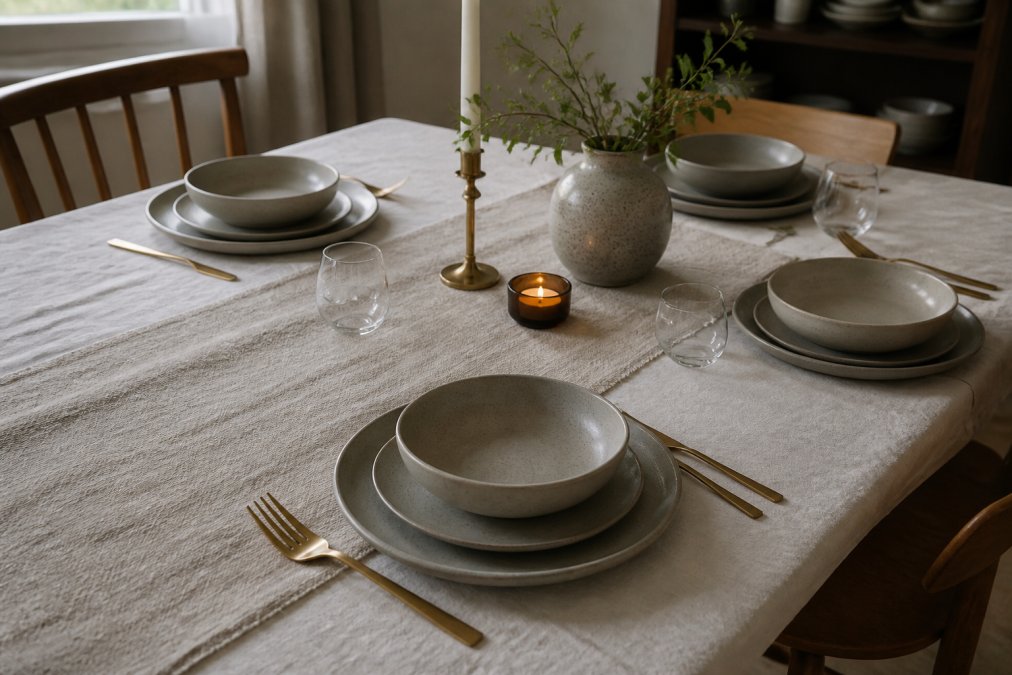
Mytoque Stoneware Sets: Matte Glazes and Organic Shapes
Mytoque's strength is texture. Its stoneware sets favor matte glazes that soften under warm light and organic shapes that avoid hard symmetry. Reactive glazing means no two plates look identical, which is a feature if you want a collected, lived-in table and a drawback if you want perfect uniformity across a service for four.
Hawkins New York Stoneware Sets: Neutral Hues and Table Styling
Hawkins New York builds around restraint. Its stoneware sets use neutral hues that layer easily with table runners, linen napkins, and existing kitchenware. The silhouettes are cleaner, which makes a tablescape look deliberate rather than assembled.
Durability and Scratch Resistance: Long-Term Wear and Tear
Durability is where lifestyle reviews usually stop, and it is where the real differences show up. Both brands use high-fired stoneware, which resists chipping better than earthenware. The failure point is rarely the body of the plate; it is the glaze.
- Stacking wear: Matte glazes scratch against each other more than glossy ones. Use felt protectors between plates.
- Cutlery marks: Metal utensils leave gray lines on matte surfaces. A gentle abrasive cleanser removes most of them.
- Thermal shock: Moving a cold plate straight to a hot oven can craze the glaze. Let pieces reach room temperature first.
- Rim chips: Thin, organic rims chip faster than thick, rounded ones. Handle them like glassware.
How to Choose Dinnerware for Your Home: Material, Finish, and Daily Use
To choose dinnerware for your home, match three variables to how you actually live: material, finish, and frequency of use. Get those right and the brand decision becomes obvious.
Microwave, Dishwasher, and Heat Retention Performance
Both brands produce microwave safe and dishwasher safe stoneware across most collections, but "safe" does not mean "optimal." Stoneware retains heat well, which keeps food warm through a slow dinner and means plates stay hot to the touch longer than porcelain.
Three practical rules apply to both:
- Avoid sudden temperature swings, which cause thermal shock and glaze crazing.
- Let dishes cool before stacking, since trapped heat and moisture dull finishes.
- Check each product page, because glazes and metallic accents vary by collection.
Price Per Piece and Value: Which Brand Delivers More for Your Table?
Price per piece is the fairest way to compare, because a "cheaper" set often includes fewer pieces. Divide the set price by the number of plates, bowls, and mugs to see the real cost. That single calculation exposes the most common trap in dinnerware shopping: a set marketed as a bargain that quietly drops the mugs or the salad plates you assumed were included.
- Count usable pieces, not listed pieces. A "16-piece service for four" usually means four dinner plates, four salad plates, four bowls, and four mugs. If you never use mugs, the effective count is 12, not 16.
- Divide set price by usable pieces. This is your true cost per piece.
- Add the open-stock premium. If you want a fifth place setting later, you will likely buy individual pieces at a higher per-piece rate than the set. Factor that in if you entertain.
- Divide by expected years of service. A set that lasts ten years costs one-tenth of its price per year. A set that chips in two years costs five times as much annually, even if the sticker price was lower.
Environmental Impact and Ethical Sourcing in Stoneware Production
Environmental impact is the angle most comparisons skip entirely. Stoneware production is energy-intensive: kilns fire at high temperatures, and glazes may contain heavy metals that require careful handling. Responsible makers publish where their clay comes from and how they manage waste and emissions.
Ask three questions of any brand:
- Does it disclose its clay and glaze sourcing?
- Does it publish firing and emissions practices?
- Does it offer durable, long-lasting pieces rather than disposable trends?
Frequently Asked Questions
What are the primary differences between Mytoque and Hawkins New York stoneware dinnerware?
Mytoque leans toward organic shapes and matte glazes with a handmade feel, while Hawkins New York focuses on neutral hues and clean silhouettes that style easily for home entertaining. Glaze durability, chip resistance, and price per piece vary by collection. Compare service for four sets directly to see which finish and color palette matches your table setting and daily use.
Is Hawkins New York stoneware dinnerware durable enough for everyday use?
Hawkins New York stoneware is built for daily use. For heavy daily rotation, check whether a set is listed as scratch resistant and avoid sudden temperature changes, which stress any stoneware glaze over time.
Which brand offers better value for high-end stoneware dinnerware sets?
Value depends on how you weigh design against price per piece. Hawkins New York pieces carry a design-forward premium tied to neutral hues and table styling. If you entertain often and want hero pieces for a tablescape, Hawkins may justify the spend; for daily use across a busy household, Mytoque usually stretches further.
Are Mytoque and Hawkins New York dinnerware dishwasher and microwave safe?
Always confirm on the individual product page, since metallic rim finishes and some reactive glazes should stay out of the microwave. Heat retention is strong in stoneware, so plates hold warmth through a meal, but let them cool before stacking to protect the glaze and avoid thermal shock.
The real challenge is not picking a brand; it is building a table that survives daily use without losing its looks. Oatmehome curates practical kitchen essentials, home tools, and bathroom accessories designed around everyday function, so you can pair your stoneware with organizers and cleaning supplies that keep the whole routine simple. Explore the Oatmehome range and build a table that works as hard as you do.