

Why Choose Functional Home Tools That Save Time
Table of Contents
- Why Functional Home Tools Beat a Drawer Full of Gadgets
- What Functional Home Tools Do That Cheap Alternatives Can't
- Essential Household Tools for Beginners: What Goes in Your First Kit
- Durable Kitchenware Selection: How to Spot Tools That Last
- Smart Home Gadgets That Actually Work (and What to Skip)
- Space-Saving Home Tools for Small Apartments and Busy Households
- Tool Maintenance and Longevity: Make Every Purchase Count
- Build Your Functional Home Toolkit Without Wasting Money
- Frequently Asked Questions
Last Updated: September 4, 2026
Why Functional Home Tools Beat a Drawer Full of Gadgets
Most households accumulate a graveyard of single-use gadgets that promised convenience but delivered clutter. Functional home tools solve this by earning their place in your kitchen, cleaning closet, or workbench through genuine daily utility. At Oatmehome, we curate products that prioritize practical design over novelty. Functional home tools are items designed with a clear primary purpose, built from durable materials, and constructed to make routine tasks measurably faster or easier.
The real shift happens when you stop buying for the "what if" moment and start buying for the "every single day" routine. A tool that simplifies cooking, cleaning, or organizing becomes an extension of your workflow rather than an obstacle. This guide from Oatmehome breaks down why investing in these workhorses saves time, money, and frustration, and we will show you exactly how to build a kit that serves you for years. Below, we cover the essential categories, the smart home gadgets that actually work, and the maintenance habits that protect your investment.
What Functional Home Tools Do That Cheap Alternatives Can't
The gap between a $5 wrench and a $25 wrench isn't just marketing; it's metallurgy, tolerance, and design. Cheap tools are often made from low-grade zinc or pot metal that deforms under load, whereas functional tools use heat-treated chrome vanadium or stainless steel (materialseducation.org). This difference is measurable: a hardened steel jaw resists spreading, so it doesn't strip a bolt head, while a soft metal jaw rounds it off, turning a 10-minute job into a 2-hour extraction project.

Consider the failure points in common household items. A cheap mop with a plastic hub often cracks at the threaded connection within six months. A functional mop uses a metal or reinforced ABS hub, and the handle is often anodized aluminum, which won't corrode in a damp closet. Similarly, a low-cost kitchen knife is stamped from a single sheet of soft steel, meaning it dulls quickly and requires frequent sharpening. A functional knife is typically forged or made from higher-carbon steel (like AUS-8 or German X50CrMoV15), which holds an edge significantly longer and resists chipping (knifesteelnerds.com).
The real cost difference emerges in precision. A cheap screwdriver tip is often ground imprecisely, so it cams out of the screw head, stripping the fastener. A functional screwdriver has a precisely machined tip that bites into the screw, transferring full torque. This is why professionals use tools with tighter tolerances: they reduce the physical effort required and prevent damage to the workpiece. The efficiency gain is not just about speed; it's about avoiding the cost of replacing damaged screws, broken furniture, or re-doing a paint job.
Ergonomics also play a critical role. Cheap tools often have hard, narrow handles that create pressure points, leading to hand fatigue and blisters during extended use. Functional tools feature dual-density grips with a rubber overmold that absorbs vibration and conforms to your hand. For repetitive tasks like sanding or painting, this reduces the risk of strain injuries. The price difference is effectively an investment in your physical comfort and the longevity of the materials you are working on.
Finally, think about the 'time tax' of cheap tools. When a tool fails, you don't just lose the cost of the tool; you lose the time spent going back to the store, the frustration of a half-finished project, and the potential cost of a professional repair. A functional tool is designed to complete the job on the first pass, which is why the upfront cost is often the cheapest part of the equation.
Essential Household Tools for Beginners: What Goes in Your First Kit
Building your first tool kit does not require a massive budget or a dedicated workshop. For beginners, the focus should be on versatile, multi-functional items that cover the most common household tasks. A great starting point is a quality wrench that handles various bolt sizes, a reliable mop system for floor care, and a few space-saving kitchen prep tools.
A standout example is the 48-in-1 Universal Socket Wrench Tool from Oatmehome. This single tool replaces an entire drawer of sockets, fitting standard and metric sizes with a rotating head that grips bolts even at tricky 45-degree angles. For a new homeowner, this eliminates the guesswork of buying a full socket set and ensures you are prepared for furniture assembly, minor repairs, and DIY projects. Similarly, a hands-free mop and bucket set is a starter essential; it cuts cleaning time dramatically and protects your floors without requiring you to touch dirty water.


Durable Kitchenware Selection: How to Spot Tools That Last
Durable kitchenware selection comes down to material, construction, and design honesty. When you pick up a tool, check for solid materials like stainless steel, BPA-free plastics, and reinforced joints where parts connect. A common mistake is buying items that look sleek but have thin metal or weak hinges; these fail within months of regular use.
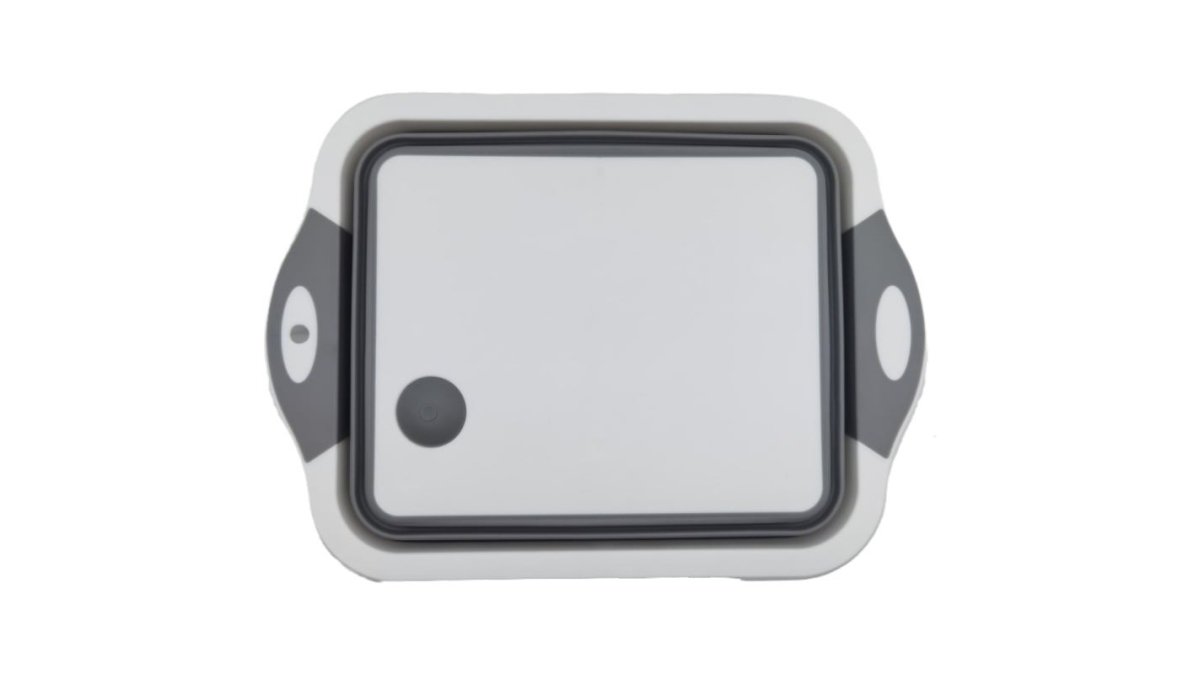
Look for kitchen tools that show thoughtful engineering. For example, the Foldable Kitchen Chopping Board is made from food-grade, BPA-free PP material that resists stains and odors, and its foldable design adds utility without sacrificing strength. The Retractable Stainless Steel Sink Rack is another example; its rust-resistant stainless steel and ABS construction are built for daily exposure to water and heat. When a product combines multi-functional design with high-grade materials, you are investing in a tool that will perform reliably for years, not just until the next season.
Smart Home Gadgets That Actually Work (and What to Skip)
The smart home market is crowded with devices that fail not because the concept is bad, but because the execution is poor. The primary failure points are connectivity instability, proprietary ecosystems, and poor power management. Before buying any 'smart' tool, ask three questions: Does it need an app to function? Does it rely on a proprietary hub? Does it have a non-replaceable battery?
If the answer to any of those is 'yes,' the gadget is likely to become obsolete quickly. The most functional smart tools are those that use standard protocols like Wi-Fi or Bluetooth LE, have replaceable batteries (AA/AAA or standard USB-C rechargeable), and offer a manual override. For example, a smart plug that works with Matter or Zigbee is a better investment than one locked into a single brand's app, because the former will continue to work even if the manufacturer goes out of business.
Consider the power draw and safety. Many cheap smart plugs use relays that are only rated for 10 amps, which is insufficient for high-draw appliances like space heaters or air conditioners. A functional smart plug will be UL-certified and rated for 15 amps, with a thermal fuse to prevent overheating (ul.com). This is a critical safety distinction that is often ignored in marketing materials.
For kitchen tools, the 'smart' feature should be passive and additive, not the core function. A digital scale that offers weight and temperature readings is useful because it provides immediate, glanceable data. However, a scale that requires a smartphone app to tare or switch units is a nuisance. The best digital tools have a simple, tactile interface that doesn't require a learning curve.
Another category to skip is 'smart' versions of tools that are already simple. A smart mop that needs charging and app updates is a liability compared to a manual mop that works instantly. The rule of thumb is: if the 'smart' feature adds more steps to the workflow than it saves, it's a gimmick. The gadgets that earn their place are those that automate a tedious task (like sealing bags) or provide precise data (like a measuring cup scale) without introducing a new failure point. Look for devices with physical buttons, clear displays, and a simple power source, and you will avoid the drawer of dead gadgets that plagues most households.
Space-Saving Home Tools for Small Apartments and Busy Households
For those living in compact spaces, every square inch of storage counts. Space-saving home tools are designed to collapse, roll, fold, or mount out of the way, ensuring you get maximum function without sacrificing your living area. The goal is to reduce clutter while maintaining the ability to perform any task efficiently.
Multi-functional tools are the key to this strategy. The 9-in-1 Drain Basket is a compact solution that slices, washes, and drains vegetables in one unit, replacing several bulky gadgets. For cleaning, the Hands-Free Flat Mop & Bucket Set features a lightweight bucket and a swivel head that reaches tight corners, storing neatly in a closet. Even the Kitchen Sink Drain Basket Organizer uses a triangular design to fit snugly into a sink corner, mounting with suction cups and keeping sponges and produce off your counter. Each of these tools is a testament to the principle that compact design does not have to mean compromised capability.
| Tool Type | Key Feature | Space Saved | Best For |
|---|---|---|---|
| Foldable Chopping Board | Transforms into storage bin | Entire prep station | Small kitchens |
| Retractable Sink Rack | Rolls up for storage | Full countertop | Daily dish drying |
| Hands-Free Mop | Lightweight, compact bucket | Closet floor space | Quick cleanups |
| 9-in-1 Drain Basket | Replaces multiple gadgets | One drawer slot | Veggie prep |
Tool Maintenance and Longevity: Make Every Purchase Count
Buying high-quality tools is only half the equation; proper maintenance ensures they deliver on their long-term value. A little routine care prevents rust, dullness, and mechanical failure, extending the life of your investment significantly. This practice also aligns with a more sustainable lifestyle, reducing the frequency with which you send items to a landfill.
Simple habits make a big difference. After using kitchen tools, wash and dry them thoroughly to prevent water spots and corrosion. For items like the Double Layer Sponge & Soap Rack, regular cleaning prevents soap scum buildup and keeps the dispenser working smoothly. For tools with batteries, like the digital measuring cup, store them without batteries if unused for long periods to prevent leakage. By dedicating a few minutes to cleaning and proper storage, you protect the craftsmanship of your tools and ensure they remain reliable for the next project, which is the essence of smart, sustainable home management.
Build Your Functional Home Toolkit Without Wasting Money
Building a functional home toolkit is a deliberate process of selecting items that offer versatility, durability, and genuine daily value. It is about resisting the allure of cheap, single-use gadgets and instead focusing on a curated collection of multi-functional tools that work together to simplify your life. This approach saves money, space, and time.
Start by assessing your most frequent pain points. If you hate cleaning floors, invest in a high-quality mop system. If you cook often, prioritize a good knife, a reliable cutting board, and a versatile measuring tool. The products mentioned here, from the Furniture Moving Tool Kit for the occasional heavy lift to the 48-in-1 wrench for repairs, are examples of purchases that pay for themselves in convenience and longevity. By choosing tools that are thoughtfully designed and built to last, you create a home environment that is easier to maintain and more enjoyable to live in.
Choosing the right tools changes the feel of your entire home, turning chores from a struggle into a quick, satisfying process. The challenge is filtering through the noise to find items that offer true functionality and durability. Oatmehome makes this easy with a thoughtfully selected product range focused on practical household solutions. From the versatility of the 48-in-1 wrench to the simplicity of the hands-free mop, our tools are designed to simplify your daily projects and provide reliable functionality and value. Get started with Oatmehome and build a toolkit that keeps your home running smoothly.
Frequently Asked Questions
What does functional tools mean in a home context?
Functional home tools are items designed to perform a specific task well, often with multiple uses, while saving space and effort. Unlike decorative gadgets that sit on counters, these tools solve everyday problems: a foldable chopping board that doubles as a strainer, or a mop with a built-in wringing system. They prioritize usability, durability, and efficiency over looks alone, making daily cleaning, cooking, and repairs faster and less frustrating.
What tools does every new homeowner need to handle basic repairs?
New homeowners need a core kit covering assembly, hanging, and minor fixes. Start with a hammer, screwdriver set, tape measure, and a 48-in-1 Universal Socket Wrench, which replaces an entire socket set. Add a level, pliers, and a utility knife for boxes. For cleaning, a Hands-Free Flat Mop handles floors without a heavy bucket. This starter set manages most apartment and house tasks without filling a garage with rarely-used tools.
How do I know if a durable kitchenware selection is worth the higher price?
Check the material and construction details before buying. Stainless steel resists rust, ABS plastic holds up to daily use, and BPA-free silicone won't warp or leach chemicals. Look for reinforced joints, anti-slip feet, and detachable parts, which signal thoughtful design. A $25 retractable sink rack in rust-resistant steel outlasts three $8 plastic versions. If a tool serves multiple functions and feels solid in hand, it usually delivers better long-term value than cheaper single-purpose items.
What are smart home gadgets that actually work for busy households?
The smart gadgets worth buying automate one repetitive task without adding complexity. A Digital LCD Measuring Cup Scale converts weights to volumes instantly, removing guesswork in baking. A Mini Heat Bag Sealer reseals snacks in seconds, cutting food waste. Skip gadgets that require apps, frequent charging, or complicated setup. The best smart home tools have one clear job, work offline, and save more time than they take to maintain.
This article was written using GrandRanker